July 12, 1926: The pleasure of driving and silencing Clemenceau

The July sun is already baking the Parisian cobblestones, but the national highway unfolding before us promises the crisp air of Normandy. I floor the Delage’s throttle. The four-cylinder engine revs up in a metallic roar that, to my immense delight, finally drowns out the thunderous voice of my passenger.

To my right, bundled up in his overcoat despite the heat, sits the true « Tiger. » Georges Clemenceau. My former boss. The man whose orders dictated the rhythm of my days and nights for years. But today, on this road to Giverny, the roles are reversed. Behind this large wooden steering wheel, I am the sole master on board. What unspeakable pleasure it is to pilot this machine and escape, if only for a few hours, the uninterrupted stream of his directives! The rushing wind whips under the windshield, sweeping away the worries of the ministry and offering me a sense of absolute freedom.

The old man has to shout to make himself heard over the din of the engine and the whistling air. He fidgets, checking his pocket watch: he wants to be in Giverny at ten o’clock sharp. He bellows in my ear what he wrote to Monet ten days ago. He laughs in anticipation, a mischievous glint in his eye behind bushy eyebrows: while poor Monet is reduced to sipping his old man’s milk soup, he, Clemenceau, fully intends to arrive with « an appetite to devour everything » and wolf down all the fish of the Loire and the cattle of the Normandy pastures!

Driving our Torpedo at nearly 80 km/h along these dirt roads is an experience of such rawness that future generations, nestled in rolling lounges, will find it hard to imagine. Here, nothing is muffled, nothing is automated. It is a constant physical wrestle with the elements:

 The din and the wind: No side windows, no roof. We are suspended in the open air, our faces whipped by a continuous blast of wind that forces us to wear thick leather goggles to avoid being blinded.

 The ordeal of dust: The roads are unpaved. Every time I pass a cart or a truck, an immense curtain of white dust engulfs us. My long, ecru linen duster coat is already grey with soot. We breathe the road, we live it, we eat it.

 The gear-shifting gymnastics: Every deceleration is a challenge. Since the gearbox is unsynchronized, I must practice the delicate art of double-clutching. A press of the pedal to disengage, a tap of the throttle in neutral to match the gear speeds, a second press of the pedal to engage the gear… If I miss, the gears screech in a sinister metallic crunch that makes the old man beside me grit his teeth.

 The physical exertion: The steering is incredibly heavy. Without any power assistance, wrestling the Delage through the sharp bends past Vernon requires a true athlete’s grip. As for the braking, purely mechanical and cable-operated, it demands that I stomp on the pedal with all my weight, anticipating obstacles hundreds of meters in advance.

Despite the jolts from the leaf springs that threaten to break our backs at every pothole, the exhilaration is absolute. We roar through villages in a mechanical thunder, scattering chickens and turning the heads of peasants. In less than an hour, we will be at Monet’s. Until then, I savor every second of this tête-à-tête with speed, proud to pilot the Tiger toward his old friend, to the glorious rhythm of modernity.
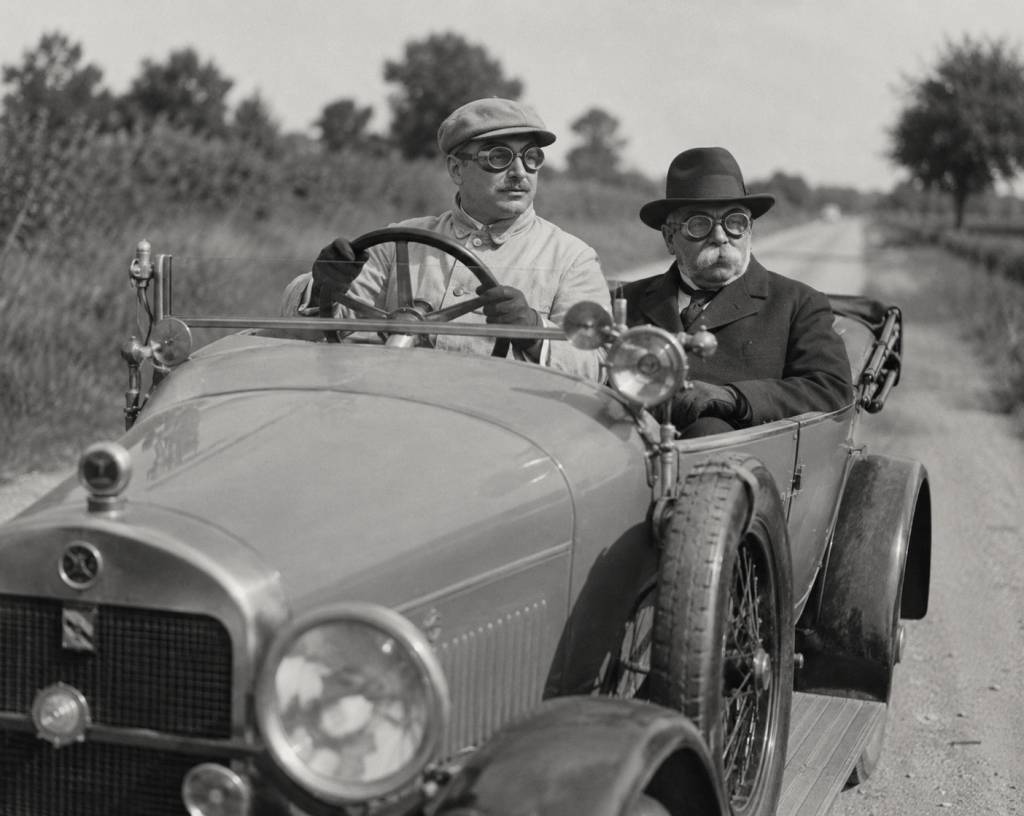
Olivier le Tigre drives Georges Clemenceau to Giverny to see the painter Claude Monet. (Images de fiction)
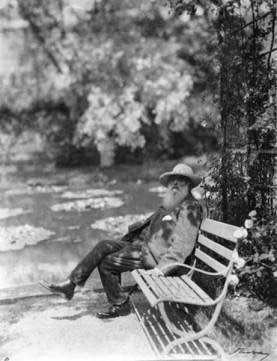

Claude Monet in the twilight of his life, in Giverny on July 12, 1926.
In a warm and humorous letter dated July 2, 1926, Clemenceau wrote to his friend to confirm his visit that day:
« My dear friend, it is settled: on Monday, July 12 at 10 a.m., I shall arrive at your home with a ravenous appetite. While you savor your milk soup, you will see me devour all the fish of the Loire and the cattle from your pastures… »
July 11, 1926: The Fall of the Franc and Caressing Cats

Keep one’s cool. Consider that the events making the front-page headlines are nothing but froth, and focus only on the real waves—deeper, more powerful, yet less visible at the outset. Counter cries with calm, tumult with silence, and rational logic with herd behavior and raw emotion.

The franc crisis is dreadful—governments fall one after another, the pound sterling soars just like the public debt, and the mood in parliament is overheated—but there is no use in alarming the Head of State. We know that financiers, bankers, and other international investors are, above all, waiting for a strong signal showing that our country is once again led by a firm hand, one that will no longer let the currency and spending drift beyond what revenues allow.

That firm hand—only one remains: it belongs to Raymond Poincaré.

But if it appears too early, before all other hypotheses have been tried, it will lack sufficient strength. And so, we attempt to hand power to Herriot, Briand, or Caillaux.

The latter is even trying the old trick of the Roman emperor turned dictator, demanding « full powers. » This makes little sense in our parliamentary republic, but we must let him try, and then fail. « Froth, » I tell you.

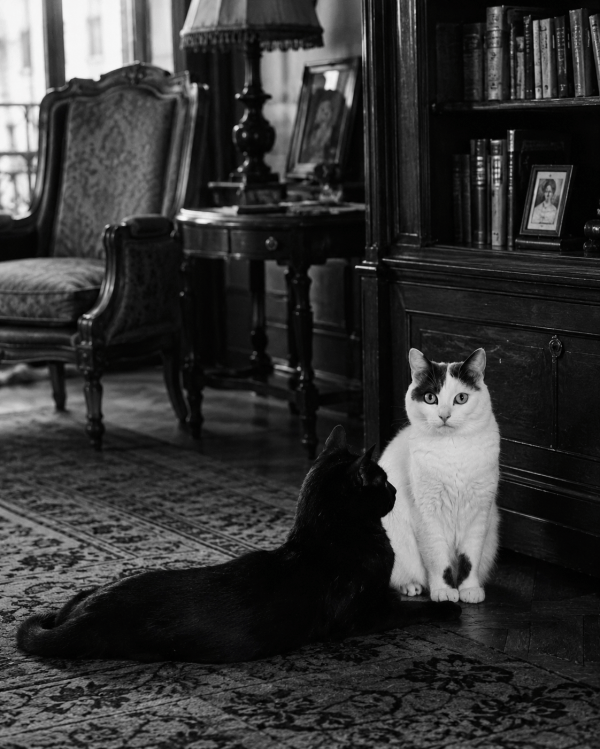
To maintain my own calm, to continue surrounding President Doumergue with sensible advice, I have a recipe, a remedy, a discreet trick: my two cats. Two females named Maïa and Luna. One entirely black, the other white with a few black patches, like a pattern from a Rorschach test. They adore being stroked; they purr with pleasure and do nothing all day but sleep, eat, and rub against members of the family and the housemaid.

Their purring soothes me, their tenderness disarms me, and they ward off negative thoughts through their sense of what truly matters. And indeed, in the end, is there anything more important than sleep, food, and the affection of loved ones? My kitties do not judge; they care nothing for titles or honors, and complex reasoning remains entirely beyond their reach. And yet, I assure you, they lack for nothing. A charming little belly, the swaying of which is clearly visible when they run toward their bowls, shows that the household feeds them well!

I would gladly offer cats to these wild parliamentarians, these feverish journalists, and these panicked bankers.

Until we bring out the big dog—our national Poincaré—the one who will know how to growl without ever needing to bite, and who will restore calm during this memorable summer of 1926.


Maïa and Luna, Olivier le Tigre’s two cats


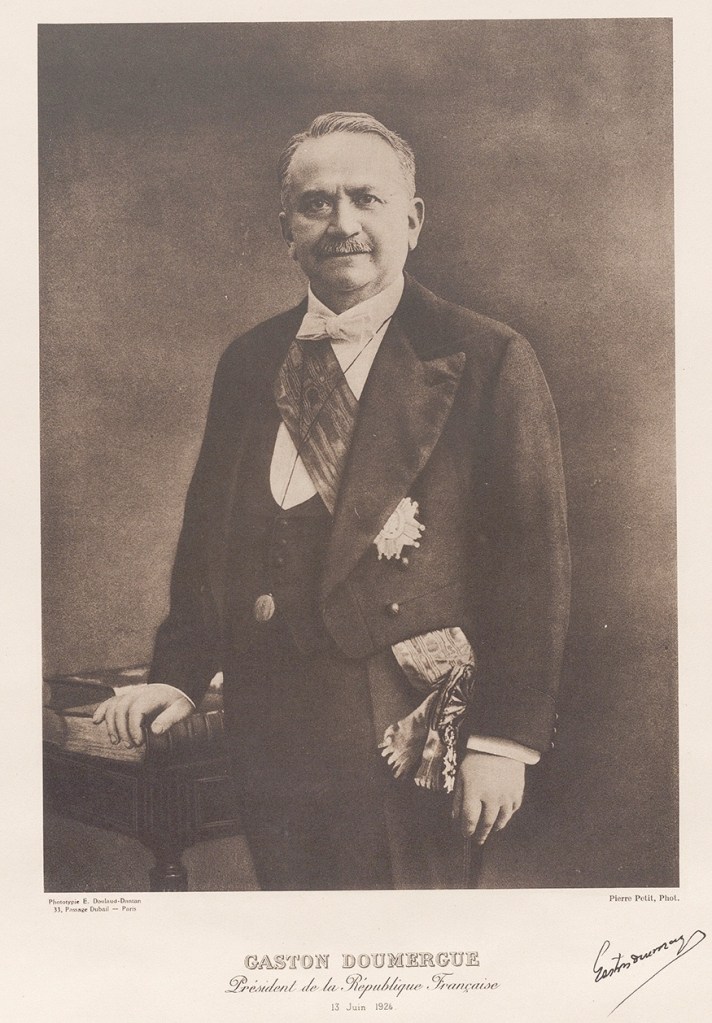
Gaston Doumergue, President of the French Republic
in 1926

11 juillet 1926 : Chute du franc et caresses de chats

Garder son sang-froid. Considérer que les événements qui font la une des journaux ne sont que de l’écume et ne se concentrer que sur les vagues réelles, plus profondes et puissantes mais moins visibles au départ. Opposer le calme aux cris, le silence au tumulte, la logique rationnelle aux sentiments et aux comportements grégaires.

La crise du franc est terrible – les gouvernements chutent les uns après les autres, la livre sterling s’envole comme le fait la dette publique et l’ambiance au parlement est surchauffée – mais il ne sert à rien d’affoler le chef de l’État. Nous savons que les financiers, les banquiers et autres investisseurs internationaux attendent surtout un signal fort montrant que notre pays est de nouveau dirigé par une main ferme qui ne laisse plus filer la monnaie et les dépenses au-delà de ce que permettent les recettes.

Cette main ferme, il n’y en a plus qu’une : c’est celle de Raymond Poincaré.

Mais si elle apparaît trop tôt, alors que toutes les autres hypothèses n’ont pas été essayées, elle n’aura pas assez de force. Donc, on tente de donner le pouvoir à Herriot, Briand ou Caillaux.

Ce dernier nous fait même le coup de l’empereur romain devenant dictateur et réclame « les pleins pouvoirs ». Cela n’a guère de sens dans notre république parlementaire mais nous devons le laisser essayer puis échouer. « L’écume » je vous dis.

Pour garder mon propre calme, continuer à entourer le président Doumergue de conseils raisonnables, j’ai une recette, un remède, un truc discret : mes deux chats. Deux femelles du nom de Maïa et Luna. Une toute noire et une blanche un peu tachée de noir, façon dessin dans un test de Rorschach. Elles adorent les caresses, elles miaulent de plaisir et ne font rien de la journée mis à part dormir, manger et se frotter contre les membres de la famille et la bonne.

Leur ronronnement m’apaise, leur tendresse me désarme et elles éloignent les pensées négatives par leur sens de ce qui compte vraiment. Eh oui, finalement, y a-t-il plus important que le sommeil, la nourriture et l’affection de ses proches ? Mes minettes ne jugent pas, se moquent des titres, des honneurs et un raisonnement complexe leur demeure inaccessible. Et pourtant, je vous assure, elle ne manquent de rien. Une jolie petite bedaine dont le balancement est bien visible quand elles courent vers leur gamelle, montre que la maison les nourrit bien !

J’offrirais bien des chats à ces parlementaires déchaînés, à ces journalistes enfiévrés et ces banquiers paniqués.

En attendant que nous sortions le gros chien, notre Poincaré national, celui qui saura grogner sans jamais avoir besoin de mordre et qui ramènera le calme pendant ce mémorable été 1926.

Les deux chats d’Olivier le Tigre : Maïa et Luna

Propulsé par WordPress.com.

Retour en haut ↑