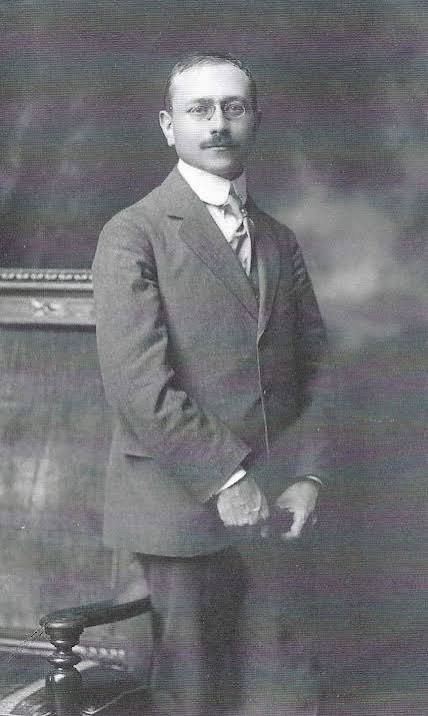
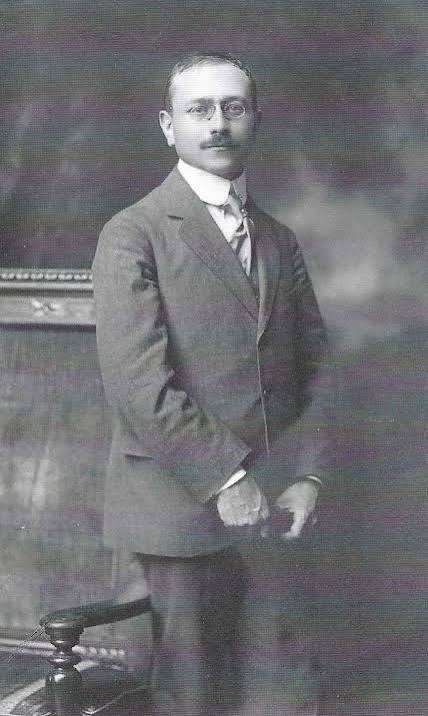
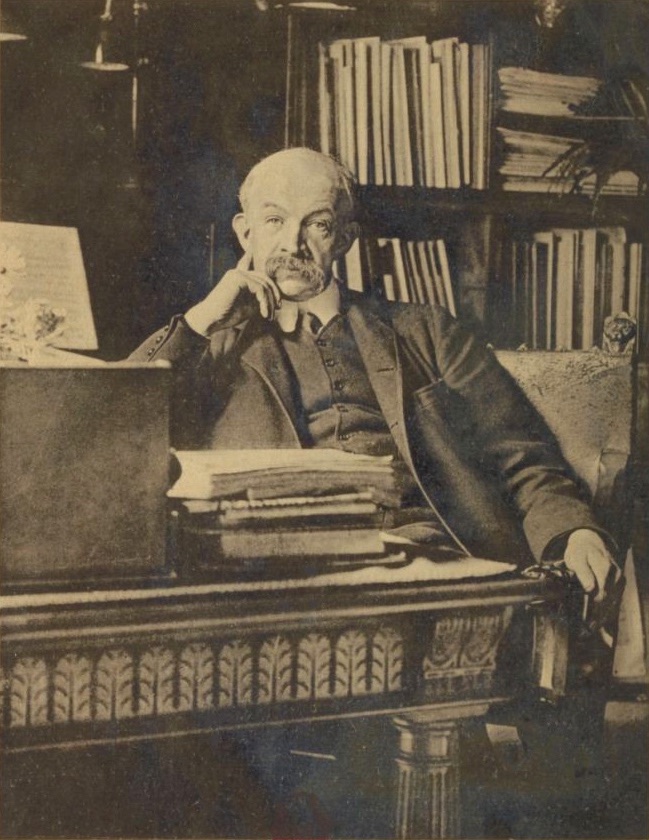
Paris celebrates July 14th under a blazing sun. The brass bands relentlessly type out, like a staccato rhythm, unending military marches along the grand boulevards, and the crowd presses forward to watch the troops parade. Amidst this official joy, I cross paths with Henri Varin near the city hall of the 14th arrondissement. We sat on the benches of the Lycée Condorcet together. I became a high-ranking civil servant; he remained an artisan, an art bookbinder from the Rue de la Tombe-Issoire. His hair has turned white all at once. In his buttonhole, there is no tricolor ribbon, but rather the small blue metal insignia of the Union Nationale des Combattants.
He paused for a moment in front of the arrondissement’s war memorial, where the national holiday’s bouquets are already beginning to wither in the heat. Engraved upon the stone is the name of his only son: Jean Varin, 1916.
— “Olivier,” he said simply, shaking my hand. His palm was cold despite the heatwave.
— “Henri. Aren’t you following the parade?”
He detached his gaze from the gilded letters. A silence settled between us—one of those silences that weigh heavier than the brass of the distant band. One never knows what to say to fathers. The newspapers celebrate heroic widows, the State adopts the nation’s orphans, but for fathers, language lacks words. One is not a « widower » to one’s child.
— “It’s our only grave,” Henri murmured, gesturing toward the block of limestone. “You know we never found anything. Nothing at all. The Somme kept everything.”
I nodded. I knew the story. The story of three hundred and fifty thousand families left without a body, condemned to search for a familiar face within the administrative lists of the Information Bureau. To break the chill, I made the mistake—the terrible mistake of the living who mean well:
— “Nicolas came back last week from his base in Thionville to complete his reserve service. He… he is being promoted to captain next month. In civilian life, he works at Latécoère. He organizes the pilots’ schedules, aircraft maintenance, and handles training. Aviation, his passion, treats him well.”
The word floated between us, indecent. Aviation. That daredevil arm of the service from which my Nicolas emerged without a scratch, his skin tanned by the open air, his laughter intact. Henri’s son, however, was pulverized by a 150 mm shell in an anonymous mud hole.
Henri avoided my gaze. His eyes fixed on the ground. His lips thinned, but anger did not come; there was no room left for anger in him, only an immense weariness.
— “That’s good, Olivier. It’s a blessing. They must live, these young ones.”
We walked a few paces to escape the crowd. In front of the zinc counter of a noisy café, he stopped and drew from his inside pocket a folded sheet of blue paper, crumpled at the corners, which he handed to me without a word. I recognized the letterhead of the Ministry of Pensions.
— “They rejected the file again,” he said in a flat, expressionless voice.
I read the lines with my bureaucratic eye. The law of March 31, 1919, is merciless. To obtain the « ascendant’s pension, » Henri had to prove that he lacked the necessary resources to live. They inspected his leather stock, measured his savings. The State applied Article 205 of the Civil Code: the pension is not a recognition of shed blood; it is a vulgar maintenance obligation. Because Henri still earns enough not to starve, Jean’s sacrifice is worth zero to the tax authorities.
— “They are telling me to come back when I am sixty, or if I become disabled,” he added with a bitter smile. “To them, Jean wasn’t a soldier who died for his country; he was just a breadwinner who owed me his daily bread. If I had been destitute, I would have been entitled to their charity. But as it is…”
He took back the paper, folded it in four, and slipped it into his jacket, just beneath the UNC insignia.
— “Thank goodness for the comrades at the local branch,” he sighed. “Over there, at least, when we sit around the table, they don’t ask for our tax returns. We know what we gave.”
He declined my invitation to have a drink. He had to get home. I knew what awaited him in his apartment on the Rue de la Tombe-Issoire. His wife, his home transformed into a sanctuary. On the mantelpiece, the inner circle of mourning had closed: beneath a glass dome lay a pocket watch stopped by moisture, a metal identity tag pitted with rust that a survivor from his unit had brought back to them in 1917, and the final letter, dated September 12th, its ink fading a little more each day.
I watched him walk away just as the first firecrackers of July 14th exploded at the end of the street. My son Nicolas is alive. And today, amidst the flags, I am almost ashamed of my joy.

The war memorial with the name of Jean Varin, who fell in 1916. There are other Varins on this grim list, the name being a fairly common one.
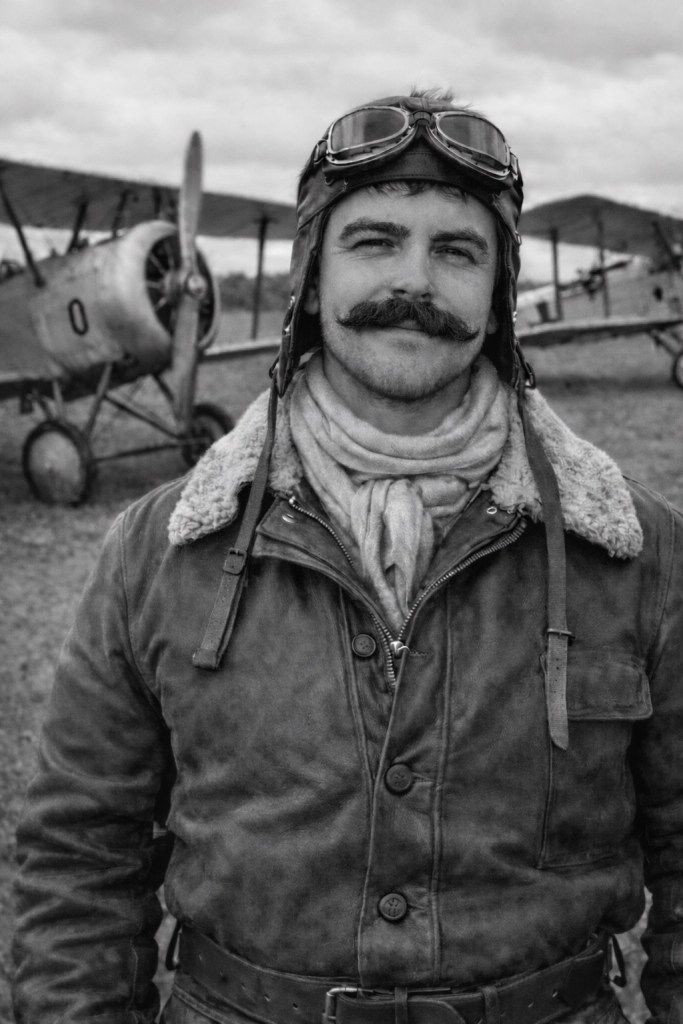
Nicolas, the son of Olivier « le Tigre, » has just been promoted to reserve captain in the Air Force.
Author’s Note on Narrative License
The character of Henri Varin, his trade as an art bookbinder, the exact details of his conversation with Olivier, and the precise location of their meeting in the 14th arrondissement of Paris are narrative constructs created for this blog post. However, they accurately embody the fully documented experiences of bereaved families of that era.
The Historian’s Corner
Grief Without Words or Status
In 1926 France, wartime mourning was a staggering, ubiquitous reality: the country wept for 1.4 million soldiers who fell at the front, and it is estimated that nearly two-thirds of the population belonged to a « circle of grief. » Yet, unlike war widows or orphans adopted under the legal status of Pupilles de la Nation (Wards of the Nation), the parents of killed soldiers possessed no specific symbolic or legal status of their own. This lack of lexical and official recognition deepened the psychological isolation of these ascendants stripped of their lineage, as detailed in the study by the Service historique de la Défense (Defense Historical Service) on the status of wartime mourning.
The Coldness of the « Ascendant’s Pension »
The administrative treatment of parents by the landmark law of March 31, 1919 (which founded the Military Disability and War Victims Pensions Code) illustrates a strictly material, rather than commemorative, logic. To obtain financial assistance, a father had to be at least 60 years old and a mother 55, while providing strict proof of insufficient resources.
Legally, this pension was modeled on the maintenance obligation defined by Article 205 of the French Civil Code: the State simply substituted itself for the deceased son to provide for the vital needs of destitute parents. Wealthy families or the working middle class were entirely excluded, turning their grief into a purely private matter without the slightest national compensation—an administrative severity recalled in the French Senate’s analyses on the right to reparation.
The Missing and the Cult of Relics
The situation of Henri’s son exemplifies the tragedy of the 350,000 French soldiers whose bodies were never recovered or identified, having been pulverized by artillery or buried deep in zones of intense combat. For these families, the absence of remains made traditional funeral rites impossible.
In response, relatives developed an intimate, sacred devotion to the small personal effects of the deceased, sent back by brothers-in-arms or recovered much later. This phenomenon of the « sanctification of relics » (identity tags, uniform fragments, notebooks) preserved under glass domes is analyzed in depth in the reference literature on commemoration and mourning practices in France.
The Home-as-Temple and Circles of Grief
The historian Stéphane Audoin-Rouzeau theorized these post-1918 family dynamics. Through private archives, he demonstrates how the loss of a son froze the domestic space, transforming some homes into true memorial temples where time stood still. Mourning was organized in concentric « circles » extending from the parents to networks of friends, maintaining a constant memorial pressure throughout the 1920s—a subject explored in his work presented by the journal L’Histoire.
War Memorials and the Associative Refuge
Enacted to regulate collective mourning, the law of October 25, 1919, required every municipality to honor the memory of its dead. In the absence of individual graves for nearly a quarter of the soldiers, local war memorials served as indispensable collective tombs for families, including during national holidays like Bastille Day, as explained by the Chemins de mémoire portal.
In the face of state shortcomings, major veterans’ organizations like the Union Nationale des Combattants (UNC) opened their local branches en masse to bereaved parents. As demonstrated by the historian Antoine Prost in his seminal works covered by Le Monde, these associations provided an essential space for sociability and civic recognition against the silence of institutions.
Additional Bibliography
Audoin-Rouzeau, Stéphane, Cinq deuils de guerre (1914-1918) [Five War Mournings], Paris, Tallandier, 2001.
Prost, Antoine, Les Anciens Combattants et la société française (1914-1939) [Veterans and French Society], Paris, Presses de la Fondation nationale des sciences politiques, 1977 (3 vols.).
Winter, Jay, Sites of Memory, Sites of Mourning: The Great War in European Cultural History, Cambridge, Cambridge University Press, 1995.
The Weather on this Bastille Day
The month of July 1926 remains in meteorological annals as one of the hottest of the 20th century in France, marked by a historic heatwave that gripped the entire country, particularly between July 10th and 15th.
In Paris, on that specific day of July 14, 1926:
The sky was perfectly clear.
Suffocating temperatures choked the capital, soaring well past 35°C in the shade during the afternoon.
The heavy atmosphere, the swirling dust, and the withering flowers on the local war memorial described above are therefore not poetic license at all: Parisians truly celebrated this Bastille Day of 1926 by desperately seeking out shade and the cool relief of lemonades!
1926: The Year of Great Breakups— Crises, Peace, and Modernity