« Non, mais tu ne vas pas sortir comme ça ? »
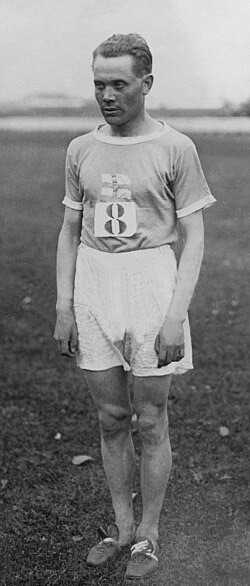
Mon épouse est stupéfaite. Elle contemple ce qu’elle appelle « mon accoutrement » : j’ai enfilé une culotte courte – le « short » des Anglais – à la place d’un pantalon. En guise de haut, je porte un maillot de corps blanc et, enfin, mes chaussures habituelles en cuir ont été remplacées par des Keds en caoutchouc et toile.
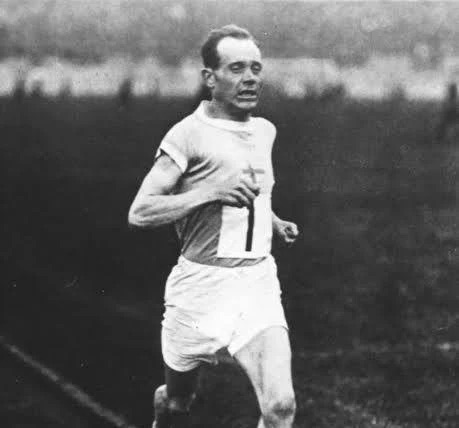
Je viens d’indiquer à Nathalie que je souhaite dorénavant m’entraîner à courir, en ville ou dans le parc de Versailles, à raison d’une heure chaque samedi et chaque dimanche. Mon modèle est le coureur finlandais Paavo Nurmi et son entraînement rigoureux.
Elle reprend, en essayant de me convaincre avec un peu d’humour :
« C’est vrai que le parc de Versailles est tellement vaste que l’on pourrait – presque – se croire dans les forêts finlandaises. » Elle ajoute avec une logique implacable :
« Déjà, tu vas te blesser. Courir sur les pavés de Versailles, puis sur les chemins autour du Grand Canal avec des chaussures aux semelles aussi minces… tu ne sentiras plus tes pieds tant la douleur sera vive. Et puis surtout, c’est complètement indécent. Sur un stade, un homme peut à la rigueur se contenter de cette culotte pour faire un cent mètres, mais en ville ou aux abords du château, c’est impensable. Et si en plus tu cours, un garde du parc ou un agent de police va probablement t’arrêter en te prenant, au mieux pour un voleur ou un vagabond, au pire pour un fou ! »
Je soupire en ajustant mes lacets. Nathalie a raison sur un point : la minceur de mes semelles ne pardonne rien. Pourtant, l’image de Paavo Nurmi, métronome à la main, défiant le chronomètre sous le soleil de Colombes deux ans plus tôt, me hante. Si le « Finlandais volant » s’astreint à une telle discipline, pourquoi un Français ne pourrait-il pas cultiver sa forme physique en dehors des structures rigides d’un club ?
« Nathalie, l’avenir appartient à ceux qui bougent ! » répliqué-je, un brin bravache, tout en ajustant mon maillot de corps.
Je tente alors une première sortie par la porte de service pour éviter les voisins, mais à peine ai-je atteint le trottoir que le regard pétrifié d’un cocher me fait l’effet d’une douche froide. Dans mon accoutrement, je me sens soudainement nu. Un groupe de promeneurs en costume trois-pièces et canotiers s’arrête net, me dévisageant comme si j’étais une bête curieuse échappée de la ménagerie royale.
Nathalie, qui m’observe depuis la fenêtre, ne peut s’empêcher de lancer :
« Alors, Paavo ? On attend que la police vienne vérifier ton permis de courir ou on rentre mettre un pantalon ? »
La raison finit par l’emporter sur l’ambition athlétique. En 1926, le monde n’est manifestement pas (encore ?) prêt à voir un homme courir après rien, en culotte courte, sur les pavés de la ville royale. Je rentre m’habiller, me promettant de réserver mes exploits pédestres aux sentiers les plus isolés de la forêt de Meudon, là où seuls les écureuils pourront juger de mon indécence.
Le podcast de l’historien : décryptons ensemble l’article d’aujourd’hui 🧐
April 12, 1926: Thief, Madman, or Athlete?
“Surely you’re not going out like that?”
My wife is aghast. She takes in what she calls “my get-up”: I have put on a pair of short trousers—the English “shorts”—in place of my usual pants. For a top, I wear a simple white undershirt, and my customary leather shoes have been replaced by Keds made of rubber and canvas.
I have just informed Nathalie of my intention to begin training as a runner—either in town or in the park of Versailles—for one hour every Saturday and Sunday. My model is the Finnish runner Paavo Nurmi, and his uncompromising discipline.
She replies, attempting persuasion with a touch of humor:
“It’s true, the park of Versailles is so vast one could almost imagine oneself in the forests of Finland.” Then, with impeccable logic, she adds:
“You’re going to injure yourself. Running over the cobblestones of Versailles, then along the paths by the Grand Canal, in shoes with soles that thin… you won’t feel your feet anymore, the pain will be so sharp. And above all, it’s completely indecent. On a track, a man may perhaps get away with such attire for a hundred meters—but in town, or near the château, it’s unthinkable. And if you start running, a park guard or a policeman will most likely stop you—taking you, at best, for a thief or a vagrant, at worst for a madman!”
I sigh, bending to adjust my laces. Nathalie is right on one point: the thinness of my soles forgives nothing. And yet the image of Paavo Nurmi—stopwatch in hand, defying time itself beneath the sun of Colombes two years earlier—haunts me. If the “Flying Finn” submits himself to such rigor, why should a Frenchman not cultivate his physical fitness outside the rigid structures of a club?
“Nathalie, the future belongs to those who move!” I reply, with a touch of bravado, straightening my undershirt.
I attempt a first sortie through the service entrance, hoping to avoid the neighbors. But scarcely have I reached the pavement when the petrified stare of a coachman strikes me like a cold shower. In this attire, I suddenly feel naked. A group of passersby in three-piece suits and straw boaters comes to an abrupt halt, staring at me as though I were some curious beast escaped from the royal menagerie.
Nathalie, watching from the window, cannot resist calling out:
“Well then, Paavo? Are you waiting for the police to come and check your running permit, or shall we go back inside and put on some proper trousers?”
Reason prevails at last over athletic ambition. In 1926, the world is evidently not yet ready to see a man run for no reason, in short trousers, across the cobblestones of the royal city. I go back in to change, resolving to reserve my pedestrian exploits for the most secluded paths of the Meudon forest—where only the squirrels may sit in judgment of my indecency.