Vienne, enfin, en a fini avec nous. Le Commissariat général de la SDN ferme ses portes cette semaine — quatre ans de tutelle financière sur l’Autriche s’achèvent, et je suis du nombre des quelques fonctionnaires envoyés pour en signer le dernier rapport.
On nous reçoit, pour célébrer la chose, chez Friedrich Kastner, un diplomate du ministère des Finances autrichien avec qui j’ai travaillé sur le dossier.
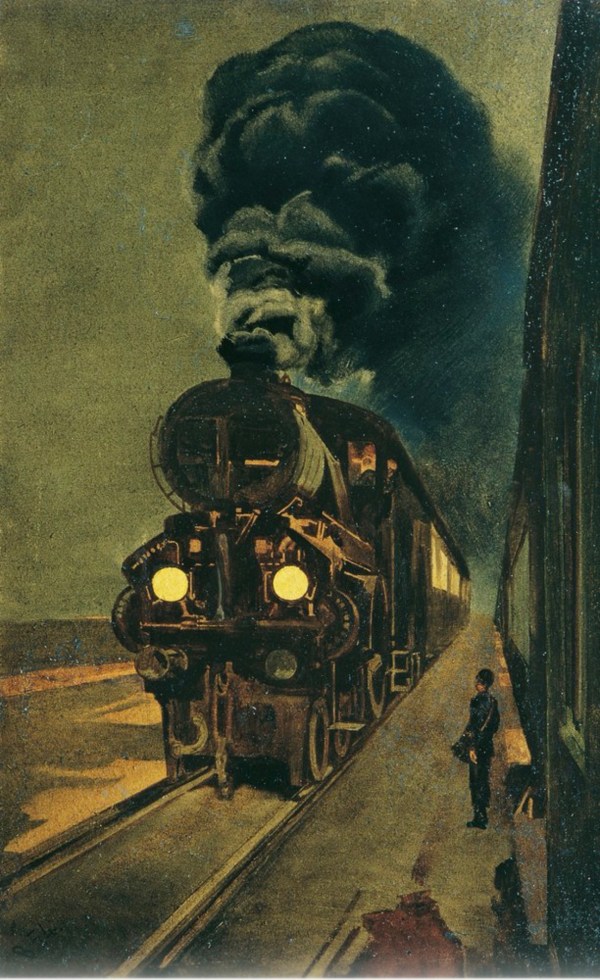
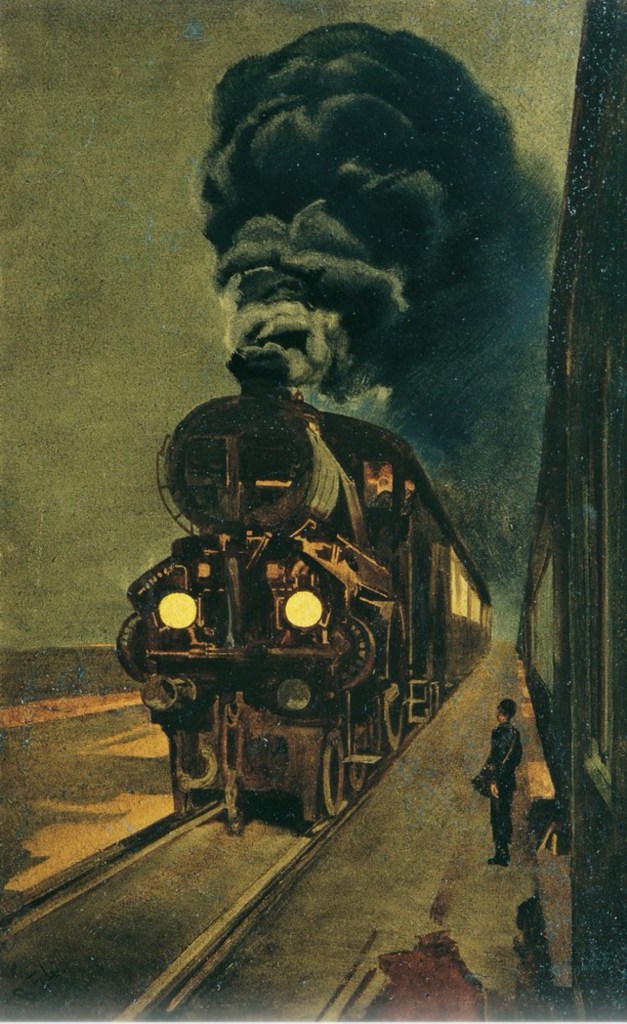
C’est dans son salon que je m’arrête net devant une petite toile accrochée entre deux portes, presque à la dérobée : une locomotive lancée à pleine vitesse, rendue avec une précision d’ingénieur — chaque rivet, chaque jet de vapeur — mais qui respire, sous la peinture, une angoisse que je ne saurais nommer. Je reste planté là, verre à la main, pendant que la conversation continue sans moi.
Kastner me rejoint, amusé. « Ça, c’est Brosch. Klemens Brosch. Un gars de Linz, d’où je suis moi-même — je l’ai connu enfant, nos familles se croisaient. » Il m’explique, en quelques phrases, ce que je n’ai bien compris que plus tard : Brosch dessine et peint depuis toujours avec un talent qui a stupéfié ses professeurs, mais la guerre l’a brisé. Depuis son retour du front, dit Kastner, ses machines ne sont plus tout à fait des machines — trains, ponts, centrales électriques, rendus avec une minutie presque maniaque, comme si fixer chaque rivet pouvait empêcher le monde de s’effondrer. « On dit en ville qu’il boit, ou pire. Je ne sais pas. Mais je sais qu’il ne vendra jamais ses planches ailleurs qu’au marché de Linz, par entêtement ou par indifférence, je ne saurais dire. »
Je demande si on peut le rencontrer. Kastner rit — « Vous, les Français, toujours pressés de comprendre » — avant de proposer que je fasse étape à Linz avant de reprendre le train pour Paris. Il connaît l’adresse d’un petit marchand où Brosch a coutume de déposer ses dessins.
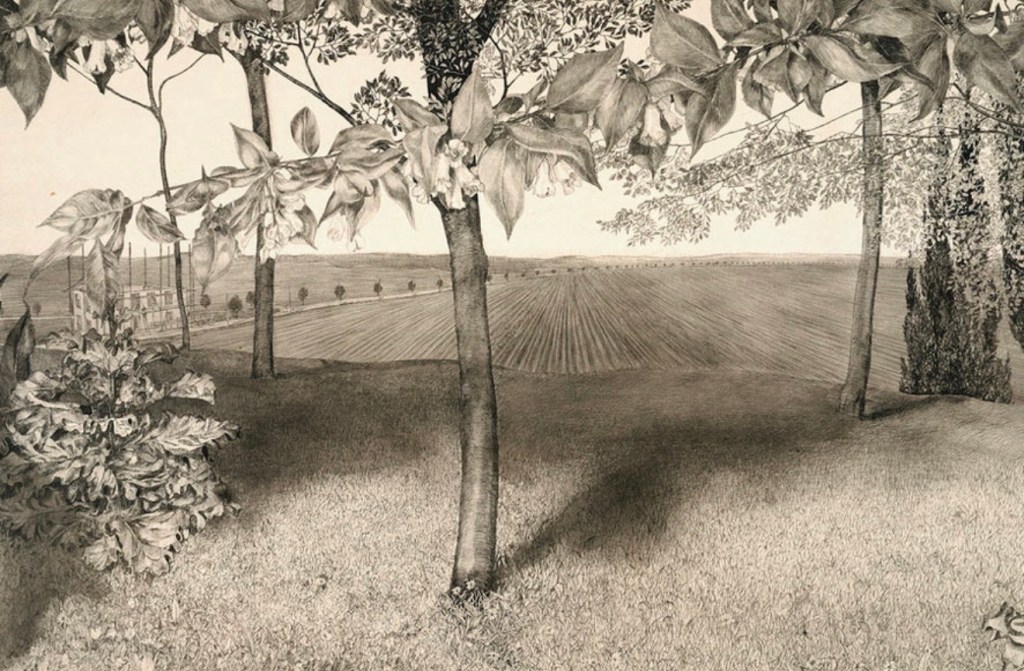
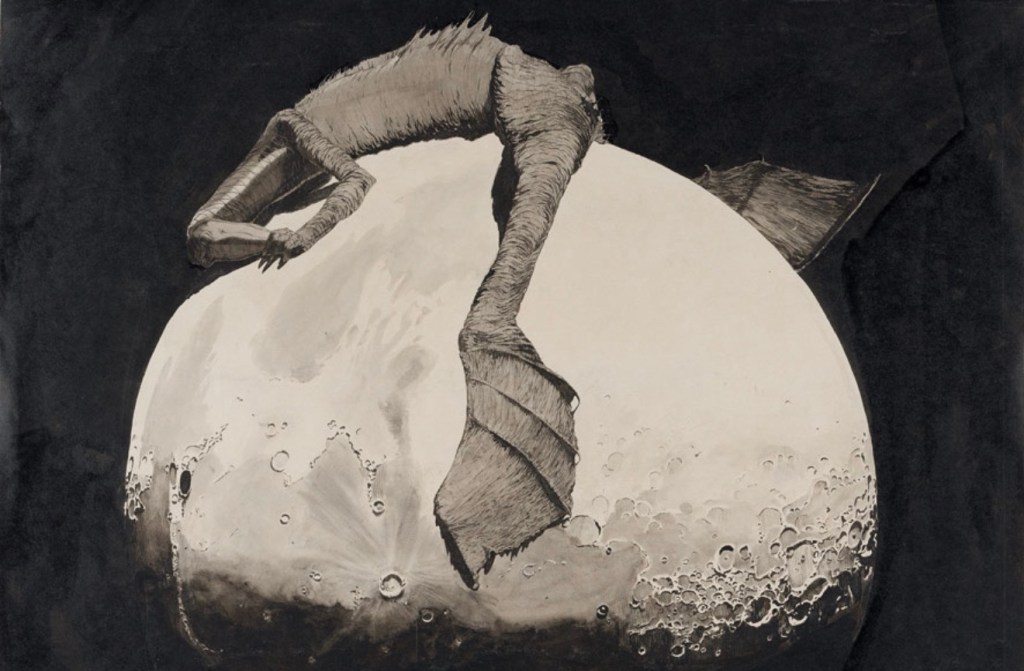
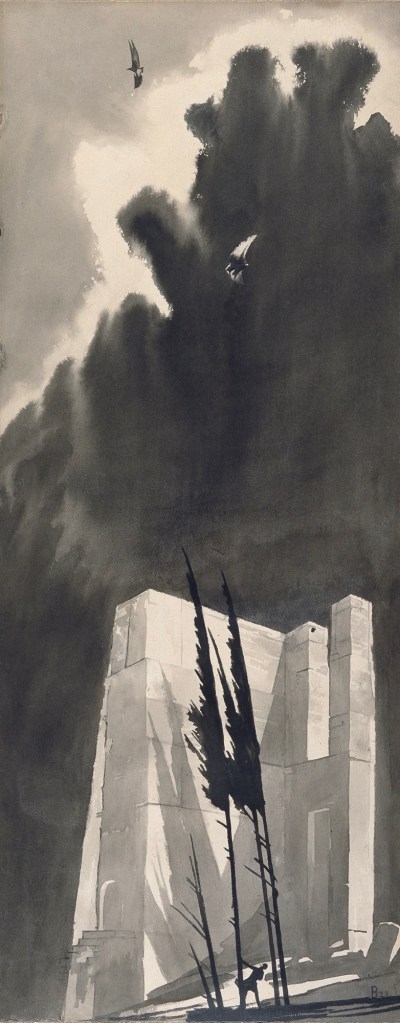
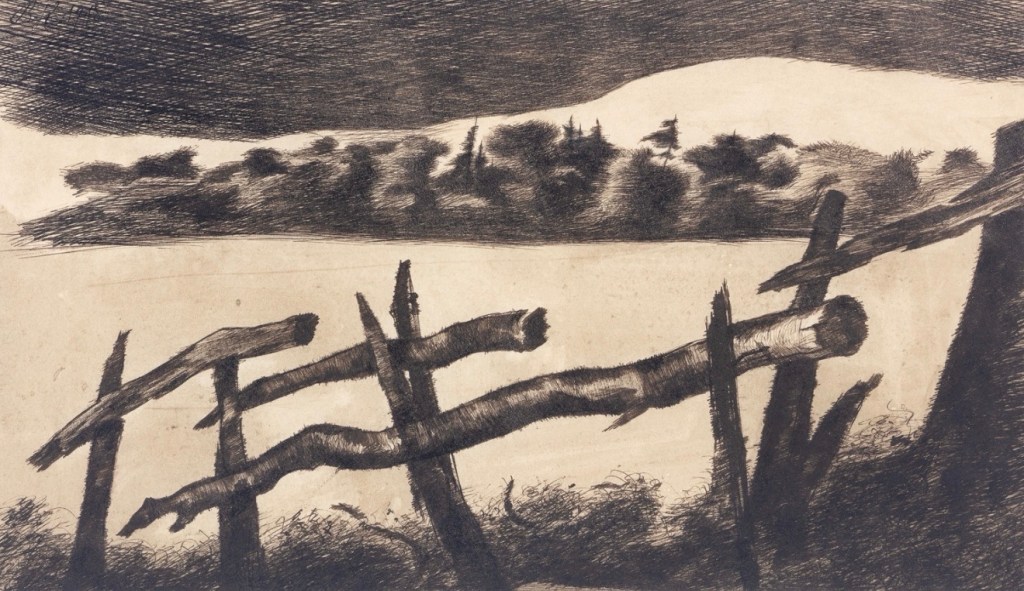
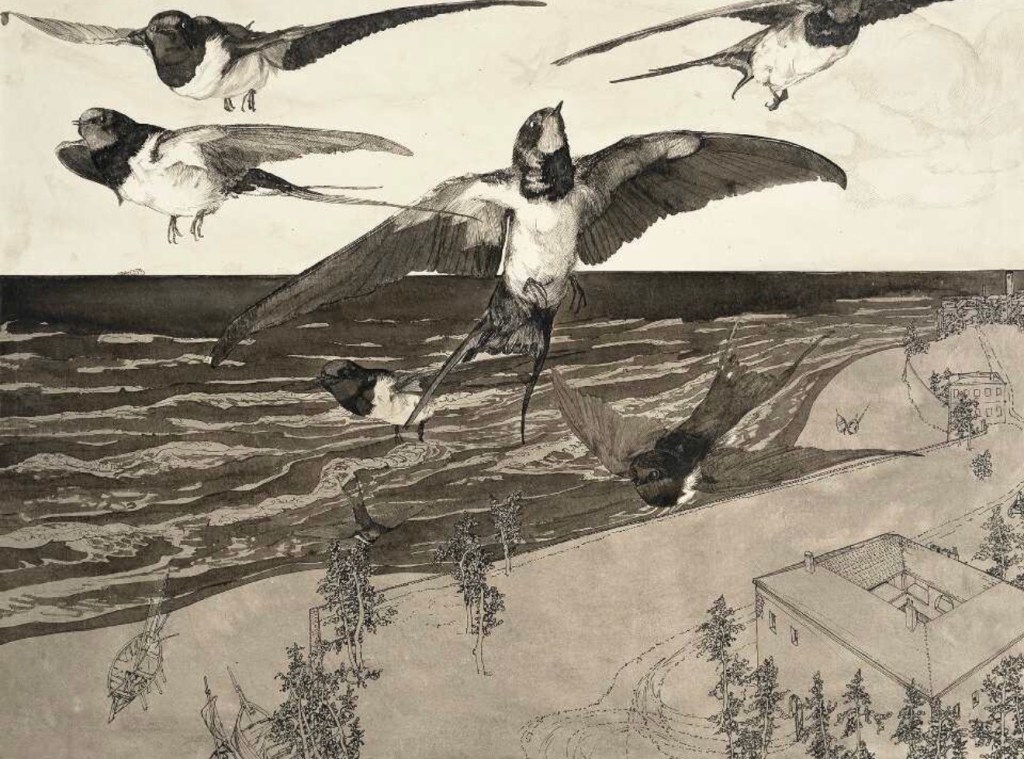
Nous le trouvons là deux jours plus tard, un homme maigre, le regard trop vif pour son visage, un carton à dessins sous le bras comme on porte un enfant. Il nous laisse feuilleter ses planches sans un mot, comme si le jugement de deux visiteurs ne pouvait rien changer à ce qu’il sait déjà de son propre travail. Cinq feuilles, surtout, m’arrêtent. Une étude ancienne, datée de 1910, pour une toile qu’il avait intitulée Sturm — déjà, à seize ans, cette même intensité dans le trait. Une scène tirée du Faust de Goethe, de 1919, tout juste rentré du front. Deux ouvriers du télégraphe, de cette année même, penchés sur leurs câbles avec une gravité presque religieuse. Un paysage nocturne, Zell am See sous la lune, d’un noir presque liquide. Et une étude d’arbre au bord du Danube, d’une précision botanique, mais qui, à la regarder longtemps, se met à ressembler à autre chose — une anatomie, peut-être, ou une plaie.
« Vous avez fait la guerre », lui dis-je — ce n’est pas une question.
Il hoche la tête, sans développer, puis me tend une étude au crayon de sa locomotive, une version antérieure, plus nerveuse, de celle que possède Kastner. « Celle-là, je l’ai refaite dix fois », dit-il , avec une indifférence qui me trouble plus que ne l’aurait fait un prix exorbitant. J’insiste pour payer ; il finit par accepter quelques schillings, moins par intérêt, je crois, que pour clore la conversation.
Je remonte dans mon train pour Paris avec cette feuille roulée sur mes genoux. Nous venons de signer, à Vienne, la fin officielle d’une tutelle financière, le constat triomphant qu’un pays se relève. Et voilà qu’à deux heures de train de là, un homme de mon âge — non, bien plus jeune que moi — porte dans ses mains cette même guerre, intacte, comme si rien ne s’était relevé en lui. L’Autriche qu’on nous dit guérie, et ce garçon qui dessine des locomotives sur le point de dérailler.
Le coin de l’historien : La reconstruction financière de l’Autriche, conduite sous l’égide de la Société des Nations de 1922 à 1926, s’achève à l’automne 1926 avec la fin de la mission du Commissariat général à Vienne — un des grands succès techniques affichés par la jeune organisation genevoise.
Klemens Brosch (1894-1926), dessinateur et peintre de Linz, en est le contrepoint silencieux : un style d’un réalisme hallucinant, par le trait et la précision presque photographique, mais hanté de visions industrielles et apocalyptiques qui annoncent la Nouvelle Objectivité et le surréalisme — on le classe aujourd’hui parmi les plus grands dessinateurs autrichiens du siècle, aux côtés de Klimt, Schiele et Kokoschka. Son tableau « Der Schnellzug » (Le Train express), peint en 1924, est aujourd’hui conservé au Belvédère de Vienne, de même que son étude Baumstudie an der Donau (1926) ; d’autres œuvres de cette période — Studie zum Sturm II (1910), Zwei Telegraphenarbeiter (1926), ou Die Landschaft mit zwei kreisenden Adlern (1922) — montrent l’étendue de son talent, de la peinture de paysage à la scène industrielle. Traumatisé par son passage au front durant la Grande Guerre, il sombre dans l’addiction et meurt en décembre 1926, à 32 ans. Resté quasiment inconnu de son vivant — il vendait alors ses planches sur le marché local de Linz —, son œuvre, plus d’un millier de dessins et aquarelles, n’a été redécouverte qu’en 2018, lors d’une rétrospective au Belvédère de Vienne.