Ten Dizzying Years — What the History Books Rush Through
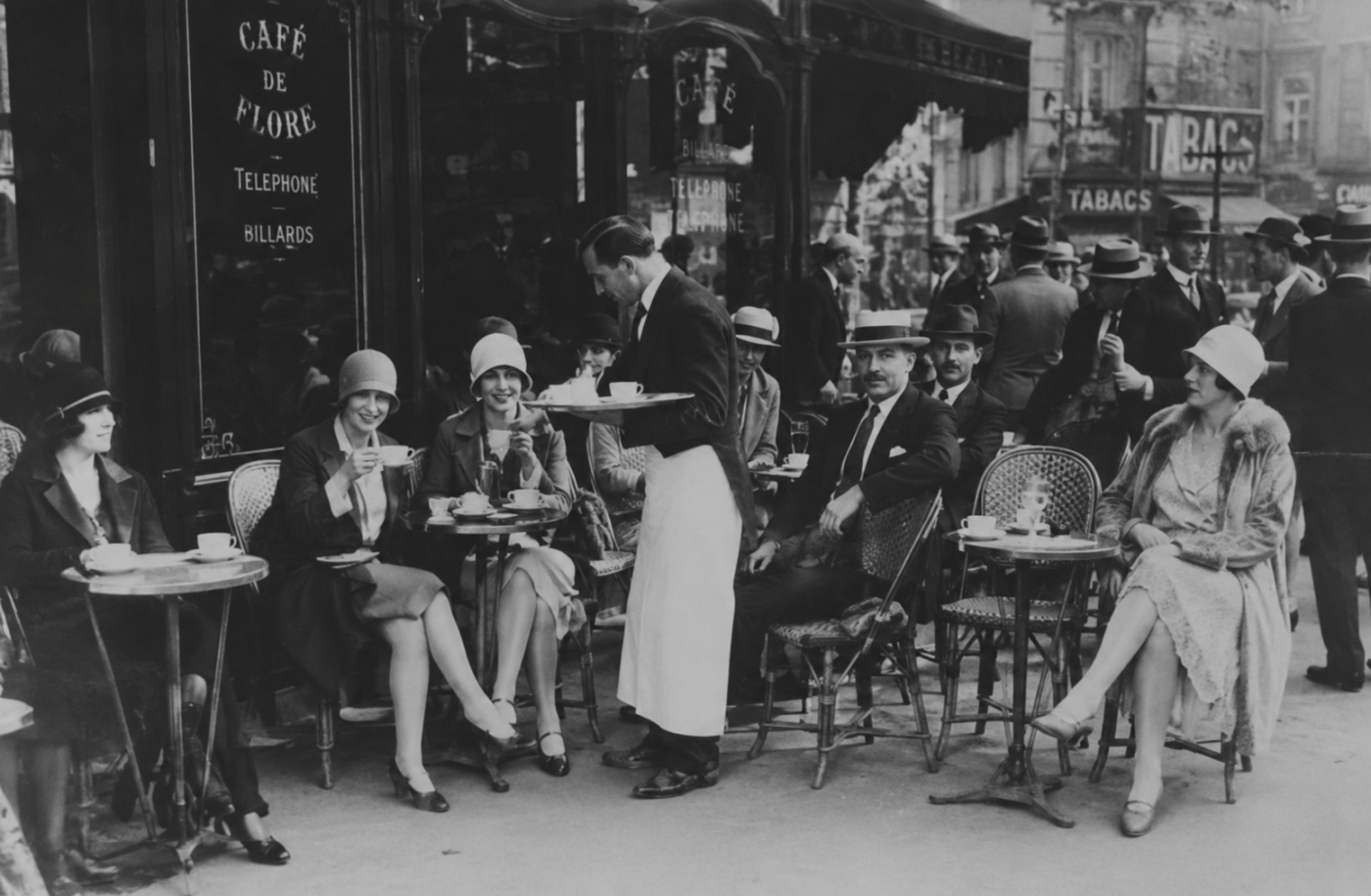
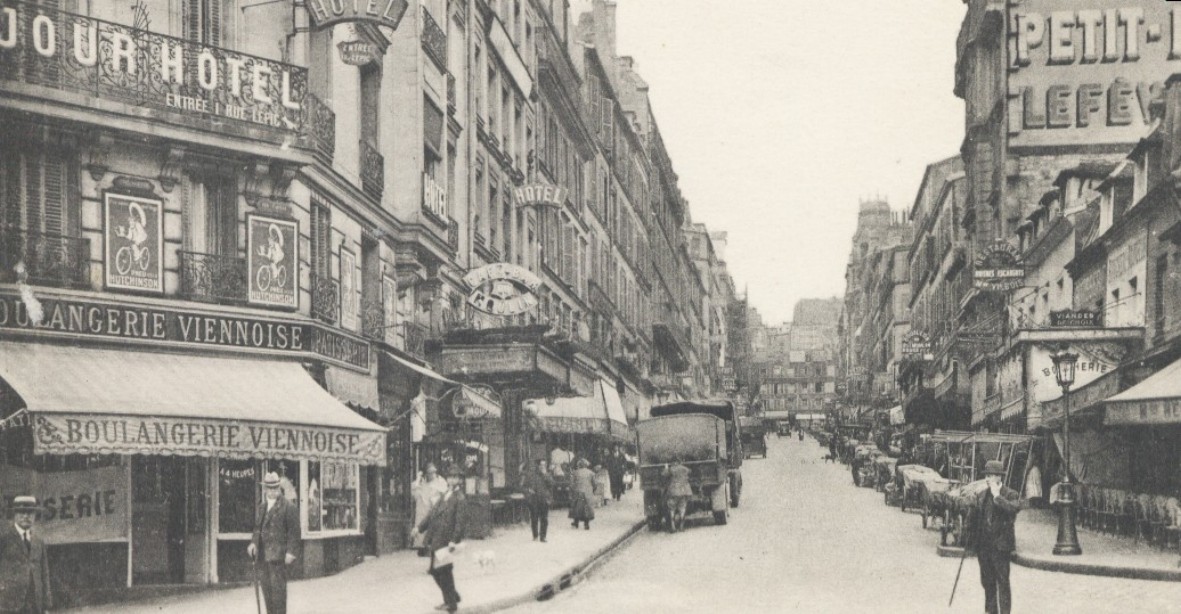
Later, people will call this the « Roaring Twenties, » and the image that survives is the flapper, jazz, and the Charleston. It isn’t wrong. But behind the gilded legend, the decade of 1919-1929 is above all one of political, social and monetary rebuilding carried out under pressure, punctuated by crisis after crisis. Here, in six acts, is what ten dizzying years actually changed.
Act I — 1919: The Workers’ Victory Nobody Celebrates
The most consequential law of the decade passes almost unnoticed in collective memory: on April 17, 1919, the Chamber of Deputies adopts the bill instituting the eight-hour day; the Senate, under pressure from the CGT trade union and amid post-Bolshevik revolutionary fears, passes it unanimously six days later, on April 23 (Le Figaro archives). The text sets 8 hours a day and 48 hours a week, with no wage cut (French Ministry of Labour). This framework will remain unchanged until the 40-hour law of 1936 — spanning the entire reign of the « Années folles. »
Act II — 1920: The Left Splits in Two at Tours
From December 25 to 30, 1920, the 18th congress of the SFIO socialist party is held in Tours. By 3,208 votes to 1,022, the majority votes to join the Third International and founds the French Section of the Communist International, with L’Humanité as its official newspaper (Herodote.net). The minority keeps the SFIO name around Léon Blum (Maitron). This split shapes the whole of French political life through the Popular Front of 1936, and well beyond.

Act III — 1924-1928: The Government Waltz and the « Poincaré Miracle »
The Cartel des Gauches, victorious in the May 1924 elections, inherits an already fragile currency: the pound sterling, worth 82.5 francs on its arrival, reaches 199 francs fifteen months later, under seven successive finance ministers (HAL — « The Poincaré Miracle »). Panic peaks on July 21, 1926, with the pound at 235 francs against 25 francs before the war (Le Figaro). Recalled to power on July 23, 1926, Raymond Poincaré pushes the franc up 20% in three days by the sheer effect of his appointment, before taking any concrete measure — a textbook case in the economics of confidence (Wikipedia). He permanently stabilizes the franc on June 25, 1928, at one-fifth of its prewar gold value (Herodote.net): this is the famous « franc Poincaré, » which will hold until 1936.
Act IV — 1925: Paris Builds the Legend, On and Off Stage
The International Exhibition of Modern Decorative and Industrial Arts is held in Paris from April 28 to November 8, 1925, between the Esplanade des Invalides and the Grand and Petit Palais. It draws 16 million visitors and — only retrospectively, in the 1960s — gives its name to the Art Deco style (Wikipedia; ArchDaily).

That same year, on October 2, 1925, La Revue nègre opens at the Théâtre des Champs-Élysées and reveals a 19-year-old dancer to the Parisian public: Josephine Baker. The following year, at the Folies Bergère, she electrifies Paris in the revue La Folie du jour, dancing the Charleston in her now-famous banana skirt (Wikipedia; Folies Bergère).

On the diplomatic front, the Locarno Treaties, signed in October 1925 between France, Germany, Britain, Belgium and Italy, guarantee the western borders drawn up at Versailles (Mémoire Vive de la Résistance). Aristide Briand, the French architect of the treaties, is awarded the Nobel Peace Prize in 1926 for it (Chemins de mémoire) — while, at his side, Poincaré is putting the franc back in order. The party and the discipline advance hand in hand, carried by the same two men.
Act V — 1927-1928: The Sky, Then Social Security
On May 21, 1927, at 10:22 p.m., the Spirit of St. Louis lands at Le Bourget after 33 hours and 30 minutes of non-stop flight from New York. More than 100,000 Parisians, alerted by radio, crowd the airfield to welcome Charles Lindbergh, who has to be pulled from the mob by the aviators present (Le Figaro archives). Less than a year later, on April 5, 1928, the Social Insurance Act is promulgated under the direct influence of Poincaré, then President of the Council: it institutes a 10% payroll contribution to cover sickness, maternity, disability, old age and death — a funding model that, according to the French Senate itself, « still operates today for Social Security » (Sénat archives).
Act VI — The Paradox of the Roaring Twenties
Here is what the picture books almost always leave out: while the flapper bobs her hair, shortens her skirt and dances the Charleston, the female citizen still cannot vote. On May 20, 1919, the Chamber of Deputies adopts, for the first time, a bill granting women full suffrage, by 329 votes to 95; the very next day, the Senate sets out to bury it, formally rejecting it on November 21, 1922, by 156 votes to 134 (French National Assembly). The Chamber passes the bill again in 1925, and again in the 1930s: each time, the Senate buries it (French Senate). French women will not vote until the ordinance of April 21, 1944.

This same decade also sees France, drained of manpower after the war, become the world’s leading country of immigration: an interministerial immigration commission is created as early as 1920, followed by the Société Générale d’Immigration in 1924, recruiting entire trainloads of Polish miners and Italian or Belgian workers (Wikipedia; Alternatives Économiques). The Roaring Twenties, then, are not just a party: they are also a vast project of human reconstruction, carried out by hands that came from far away, and by rights that, for half the population, did not move an inch.
Olivier’s Journal — December 31, 1929, midnight
Ten years, almost to the day, since I opened this notebook. I have seen two presidents, a dozen governments, a franc that nearly collapsed before being rescued by the sheer authority of one stubborn old man from Lorraine. I have seen Paris dance as if there were no tomorrow, cheer a lone aviator, dress shorter, think faster. And yet tonight, a rumor from New York moves through the salons with a gravity I do not like: they speak of a crash, of a stock exchange that collapsed within a matter of sessions, back in October. No one here quite wants to believe it yet. But I have already seen, in 1914, how quickly quiet certainty can turn into catastrophe. I close this notebook on a mad decade, and open another with, for the first time in a long while, a quiet unease rather than an eager curiosity.
The Historian’s Corner: Sources & Further Reading
- Le Figaro, archives, on the eight-hour-day law (1919).
- Herodote.net, on the Congress of Tours (1920).
- HAL, « The Poincaré Miracle, » on the franc crisis (1924-1926).
- Wikipedia, on the International Exhibition of Decorative Arts (1925).
- Wikipedia, on Josephine Baker and La Revue nègre.
- Chemins de mémoire, on Aristide Briand and Locarno.
- Le Figaro, archives, on Lindbergh’s arrival at Le Bourget (1927).
- Sénat archives, on the Social Insurance Act of April 5, 1928.
- French National Assembly, chronology of women’s voting rights.
- Wikipedia, on the second wave of immigration to France (interwar period).

