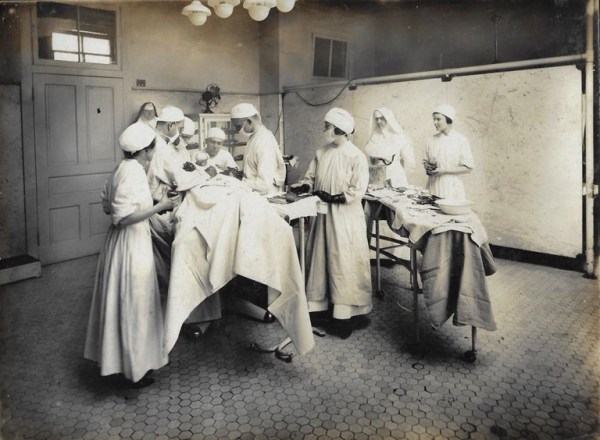
“Father, I am leaving for the United States!” Pauline, my twenty-year-old daughter, doesn’t beat around the bush. It isn’t even “I would like to”—no: she wants to.
“But with what money, my dear?” I retorted, believing I held the ultimate argument to hold her back.
She then detailed the savings she had patiently set aside working as a nurse alongside her medical studies. Above all, Pauline stressed her need for a change of scene, to indulge in astronomy—her passion—in a city like New York that is captivated by science, and to complete her medical degree in an environment far more welcoming to women than our French faculties. She is already dreaming of reaching out to Columbia’s astronomy department or attending public lectures at the American Museum of Natural History, while hoping to join the College of Physicians and Surgeons or Cornell’s medical school. She insists she can live on “next to nothing,” that her English is perfectly respectable, and that, in any case, her mind is made up.
My wife, with whom she had already discussed the matter, wholeheartedly supports the initiative: “Olivier, I assure you, it is a wonderful thing for her. Pauline is radiant. Let us let her fly the nest!”
It is true. Never has my daughter’s gaze revealed such a blend of determination, serene happiness, and steadfast confidence in the future.
It now falls to me to reach out to a few well-placed contacts to keep her from lodging in the metropolis’s unsavory quarters—such as the infamous surrounds of Hell’s Kitchen or the Bowery—and to ease her parents’ minds. I am thinking in particular of my former chief Clemenceau, who lived over there for a long time, is perfectly bilingual, and knows the Roosevelt family well. I could also reach back out to Margaret L. Hayes, the diplomat from the U.S. Embassy with whom I had an interview the other day, couldn’t I?

The Historian’s Corner
Studying Medicine as a Woman in New York in 1926:
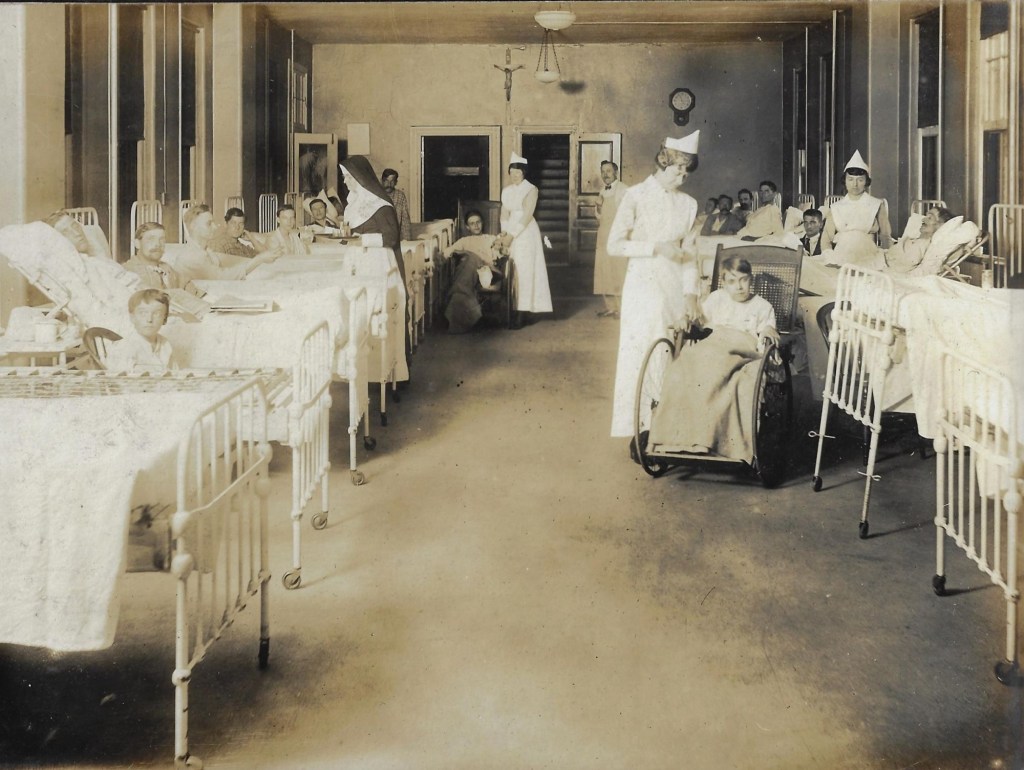
In France, medical studies had been open to women since the late 19th century, but the academic environment remained steeped in conservatism. In the United States, the situation evolved more rapidly in certain major institutions: Cornell University Medical College had been coeducational since its founding in 1898, and Columbia University’s College of Physicians and Surgeons opened its doors to female students in 1917. Furthermore, New York hospitals offered significant clinical internship opportunities for female practitioners.
Astronomy in New York Before the Hayden Planetarium:
In 1926, New York was buzzing with scientific excitement. The American Museum of Natural History (AMNH) was the beating heart of popular astronomy thanks to Dr. Clyde Fisher, who brought together enthusiasts and academics for highly sought-after public lectures (he would go on to found the Amateur Astronomers Association the following year). At Columbia, the astronomy department was undergoing major modernization: Pupin Hall and its Rutherfurd Observatory were under construction at the time and would open in 1927.
Crime and Safety in New York Under Prohibition:
Since the implementation of the Volstead Act in 1920, the sale of alcohol had been illegal in the United States. By 1926, organized crime (led by figures such as Lucky Luciano, Meyer Lansky, and Frankie Yale) controlled the city. Neighborhoods like Hell’s Kitchen (the stronghold of Irish gangs controlling the docks) and the Bowery (riddled with speakeasies, illegal gambling, and tensions in nearby Chinatown) were considered particularly dangerous for a young woman on her own.
Georges Clemenceau and His American Network:
The “Tiger” knew the United States intimately, having lived there from 1865 to 1869. While there, he worked as a correspondent for the newspaper Le Temps, taught French at a girls’ school in Stamford, Connecticut, and married an American woman, Mary Plummer. Fluently bilingual, he maintained influential political and diplomatic connections there, notably within Theodore Roosevelt’s circle.

