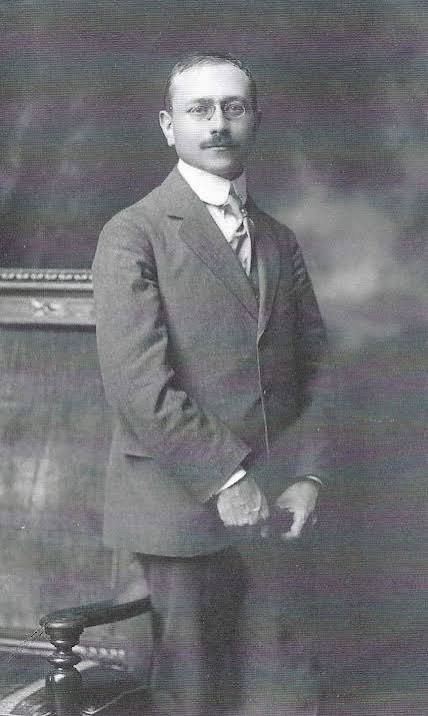
26 juin 1926. Café de la Haute-Montée.
Une chaleur de plomb écrase l’Ill. À Paris, le franc s’effondre, Briand use ses derniers jetons à la Chambre, mais ici, on pleure encore le Grand Herr, emporté le 18 mai par ce foutu cancer. Pour un ancien de Normale comme moi, la rue d’Ulm est devenue veuve. C’est ce deuil partagé qui m’amène à la table de Marc Bloch. À quarante ans, le professeur d’histoire médiévale — quatre citations à Verdun, la légion d’honneur au feu — affiche la sévérité triste de ceux qui ont perdu leur boussole morale.
Bloch s’est plongé à corps perdu dans le travail pour surmonter le vide. Entre nos tasses de café, pas de traités diplomatiques, mais des monographies agraires : les travaux récents de Thérèse Sclafert sur le Dauphiné et de Gaston Raveau sur le Poitou. Bloch prépare ses prochains cours magistraux sur les structures rurales françaises, tout en ferraillant par correspondance pour que Paul Étard succède à Herr à la bibliothèque de l’ENS.
Le dialogue s’amorce, fiévreux, hanté par le souvenir de la rue d’Ulm :
Moi : Paris me semble vide sans Herr. C’est lui qui m’a appris à traquer la vérité derrière les faux-semblants des archives officielles.
Marc Bloch : Herr était notre conscience. Il nous a montré qu’un document n’est rien sans la critique d’art et de science. C’est exactement ce que je tente de faire ici. Regarde ces relevés de parcelles : la distinction entre les openfields du Nord — ces champs ouverts et collectifs — et le bocage de l’Ouest n’est pas qu’une affaire de géographie. C’est l’histoire de la structure sociale d’un peuple.
Moi : On te reproche à la Sorbonne de délaisser l’histoire des traités pour faire de la sociologie ou de l’économie.
Marc Bloch : L’histoire-bataille est une illusion ! Après le grand massacre de 14, comment peut-on encore croire que l’histoire se résume aux faits d’armes des princes ? Mon livre sur Les Rois thaumaturges a montré comment une croyance collective — ce mythe des rois guérissant les écrouelles — a cimenté une dynastie. Aujourd’hui, je fouille le sol, l’assolement triennal, l’individualisme agraire du XVIIIe siècle, car c’est là que bat le pouls des masses.
Moi : C’est une méthode d’enquête totale. C’est ce que Herr attendait de nous.
Marc Bloch : Précisément. L’incompréhension du présent naît fatalement de l’ignorance du passé. Mais il est tout aussi vain de s’épuiser à comprendre le passé si l’on ne sait rien du présent. C’est pour cela qu’avec Lucien Febvre, nous voulons fonder une revue nouvelle, transversale, qui brisera les barrières entre historiens, économistes et sociologues.
Nous marchons une partie de la nuit sur le quai Kléber. Bloch me confie ses intuitions sur les « caractères originaux de l’histoire rurale française » qu’il est en train de théoriser en ce millésime 1926. Sa rigueur scientifique, mâtinée de cette exigence éthique reçue de Lucien Herr, me redonne de l’air. En rentrant à mon hôtel, je réalise que mes propres enquêtes sur les circuits financiers européens ne sont rien d’autre que la déclinaison contemporaine de sa méthode. Herr peut reposer en paix : sa méthode a trouvé son général.
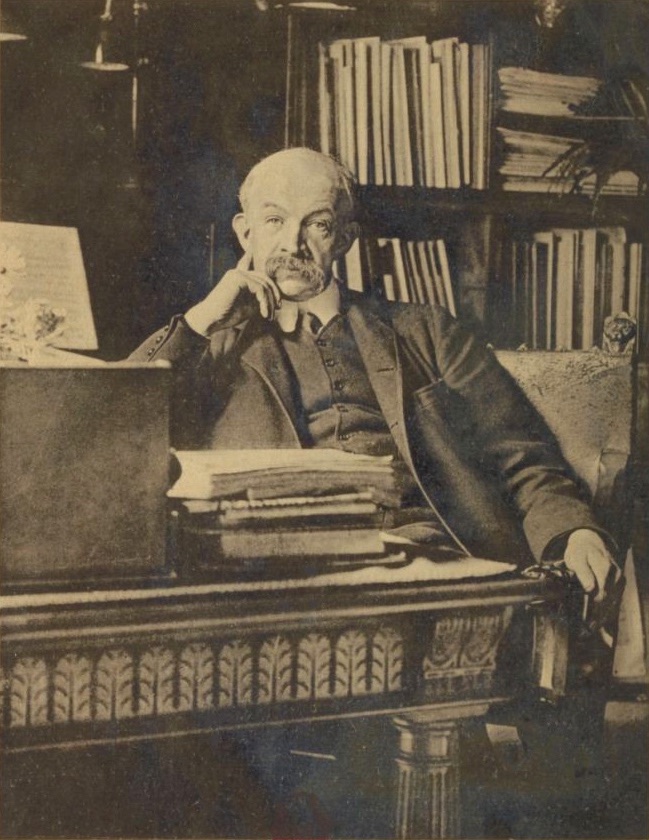
Lucien Herr (1864–1926) fut l’emblématique bibliothécaire de l’École normale supérieure et l’éminence grise du socialisme français.
Mentor intellectuel de figures majeures comme Jean Jaurès et Léon Blum, il joua un rôle crucial dans leur ralliement à la cause dreyfusarde.
Co-fondateur (ou plutôt inspirateur) du journal L’Humanité, cet érudit discret marqua profondément l’histoire politique et universitaire de la IIIe République.
June 26, 1926: In Strasbourg, the Shadow of Lucien Herr and the Lesson of Marc Bloch
A leaden heat oppresses the Ill. In Paris, the franc is collapsing, and Briand is exhausting his last chips in the Chamber, but here, we are still mourning the Great Herr, taken on May 18th by that damned cancer. For a Normalien like myself, the Rue d’Ulm has been left widowed. It is this shared grief that brings me to Marc Bloch’s table. At forty years old, the professor of medieval history—four citations at Verdun, the Legion of Honor won under fire—displays the somber severity of those who have lost their moral compass.
Bloch has thrown himself body and soul into his work to overcome the void. Between our cups of coffee, there are no diplomatic treaties, but agrarian monographs: the recent works of Thérèse Sclafert on the Dauphiné and Gaston Raveau on the Poitou. Bloch is preparing his upcoming lectures on French rural structures, while simultaneously battling through his correspondence to ensure Paul Étard succeeds Herr at the ENS library.
A feverish dialogue begins, haunted by the memory of the Rue d’Ulm:
Me: Paris feels empty without Herr. He was the one who taught me to track down the truth behind the facades of official archives.
Marc Bloch: Herr was our conscience. He showed us that a document is nothing without the critique of art and science. That is exactly what I am trying to do here. Look at these land surveys: the distinction between the northern openfields—those open, collective fields—and the western bocage is not just a matter of geography. It is the history of a people’s social structure.
Me: You are criticized at the Sorbonne for abandoning the history of treaties in favor of sociology or economics.
Marc Bloch: Battle-history is an illusion! After the great slaughter of ’14, how can anyone still believe that history is reduced to the feats of arms of princes? My book on The Royal Touch showed how a collective belief—this myth of kings curing scrofula—cemented a dynasty. Today, I delve into the soil, three-field crop rotation, eighteenth-century agrarian individualism, because that is where the pulse of the masses beats.
Me: It is a method of total investigation. That is exactly what Herr expected of us.
Marc Bloch: Precisely. Misunderstanding of the present is inevitably born from ignorance of the past. But it is equally futile to exhaust oneself trying to understand the past if one knows nothing of the present. This is why, with Lucien Febvre, we want to found a new, interdisciplinary journal that will break down the barriers between historians, economists, and sociologists.
We walk part of the night along Quai Kléber. Bloch confides in me his insights on the « original characteristics of French rural history, » which he is theorizing in this vintage year of 1926. His scientific rigor, infused with that ethical demand received from Lucien Herr, gives me a breath of fresh air. Returning to my hotel, I realize that my own investigations into European financial circuits are nothing less than the contemporary adaptation of his method. Herr can rest in peace: his method has found its general.


Laisser un commentaire