12 juillet 1926 : Le plaisir de conduire et de faire taire Clemenceau

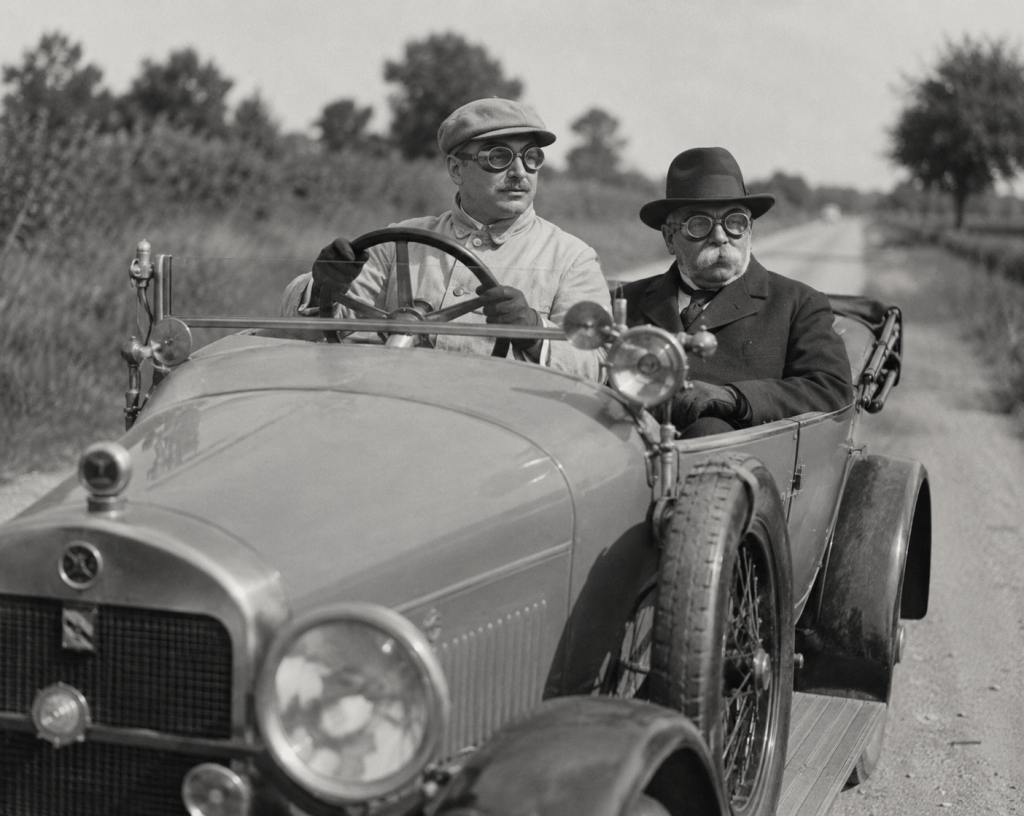
Le soleil de juillet écrase déjà le pavé parisien, mais la route nationale qui s’ouvre devant nous promet l’air vif de la Normandie. J’écrase le champignon de la Delage. Le quatre-cylindres monte en régime dans un grondement métallique qui, pour mon plus grand bonheur, couvre enfin la voix tonitruante de mon passager.

À ma droite, engoncé dans son pardessus malgré la chaleur, se tient le véritable « Tigre ». Georges Clemenceau. Mon ancien patron. L’homme dont les ordres ont rythmé mes jours et mes nuits pendant des années. Mais aujourd’hui, sur cette route de Giverny, les rôles sont inversés. Derrière ce grand volant en bois, le seul maître à bord, c’est moi. Quel plaisir indicible de piloter cette machine et d’échapper, même pour quelques heures, au flux ininterrompu de ses directives ! Le vent de la course s’engouffre sous le pare-brise, balaye les soucis du ministère et m’offre une sensation de liberté absolue.

Le vieil homme doit hurler pour se faire entendre par-dessus le vacarme du moteur et le sifflement de l’air. Il trépigne, consulte sa montre gousset : il veut être à Giverny à dix heures tapantes. Il me crie à l’oreille ce qu’il a écrit à Monet il y a dix jours. Il en rit d’avance, l’œil malicieux derrière ses sourcils broussailleux : pendant que ce pauvre Monet en sera réduit à déguster sa soupe au lait de vieillard, lui, Clemenceau, compte bien arriver avec « une faim à tout dévorer » et engouffrer tous les poissons de la Loire et le bétail des prairies normandes !

Mener notre Torpédo à près de 80 km/h sur ces routes de terre est une expérience d’une sauvagerie que les générations futures, installées dans des salons roulants, auront bien du mal à imaginer. Ici, rien n’est feutré, rien n’est automatisé. C’est un corps-à-corps permanent avec la matière :

 Le vacarme et le vent : Pas de vitres latérales, pas de toit. Nous sommes suspendus dans le vide, le visage fouetté par un flux d’air continu qui nous oblige à porter d’épaisses lunettes de cuir pour ne pas être aveuglés.

 Le supplice de la poussière : Les routes ne sont pas goudronnées. À chaque fois que je croise une charrette ou un camion, un immense rideau de poussière blanche nous enveloppe. Mon longs cache-poussière en lin écru est déjà gris de suie. On respire la route, on la vit, on la mange.

 La gymnastique des vitesses : Chaque ralentissement est un défi. La boîte de vitesses n’étant pas synchronisée, je dois pratiquer l’art délicat du double débrayage. Un coup de pédale pour débrayer, un coup de gaz au point mort pour égaliser la vitesse des pignons, un second coup de pédale pour engager le rapport… Si je me rate, les engrenages hurlent dans un sinistre craquement de métal qui fait grincer des dents le vieil homme à mes côtés.

 L’effort physique : La direction est d’une lourdeur incroyable. Sans aucune assistance, redresser la Delage dans les virages serrés après Vernon demande une véritable poigne d’athlète. Quant au freinage, purement mécanique à câbles, il exige que j’écrase la pédale de tout mon poids en anticipant les obstacles des centaines de mètres à l’avance.

Malgré les secousses des ressorts à lames qui nous brisent le dos à chaque nid-de-poule, l’ivresse est totale. Nous traversons les villages dans un tonnerre mécanique, faisant s’éparpiller les poules et se retourner les paysans. Dans moins d’une heure, nous serons chez Monet. D’ici là, je savoure chaque seconde de ce tête-à-tête avec la vitesse, fier de piloter le Tigre vers son vieil ami, au rythme glorieux de la modernité.
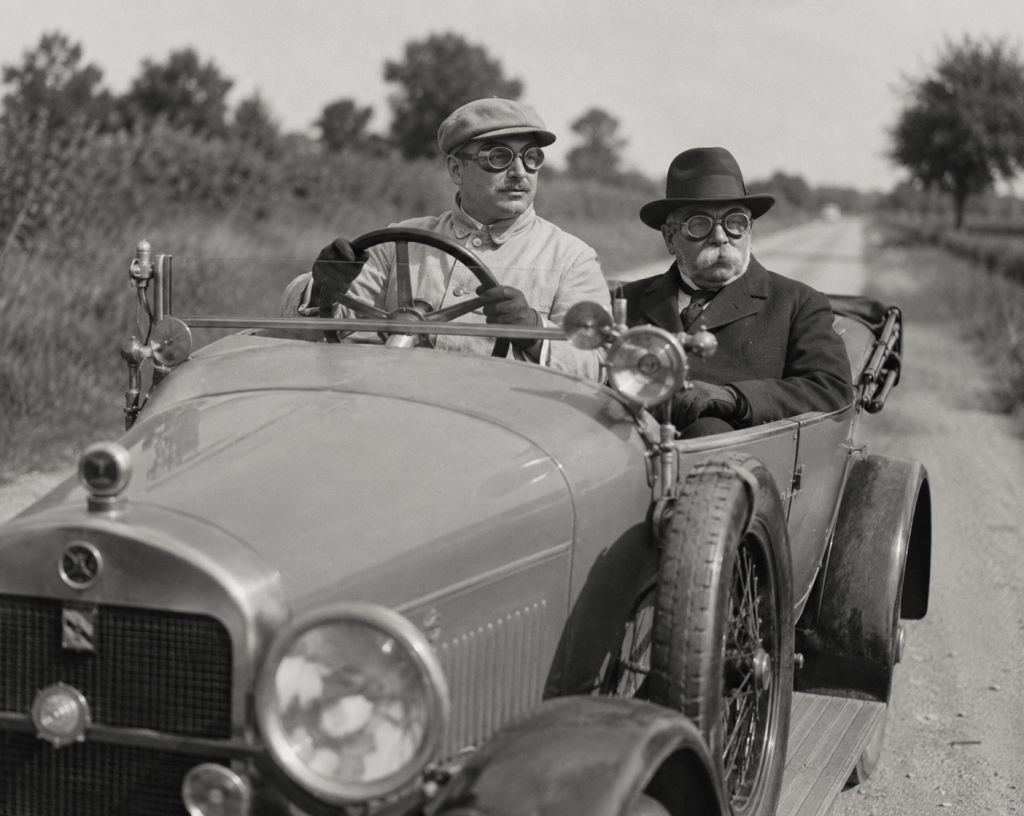
Olivier le Tigre conduit Georges Clemenceau à Giverny pour voir le peintre Claude Monet. (Images de fiction)

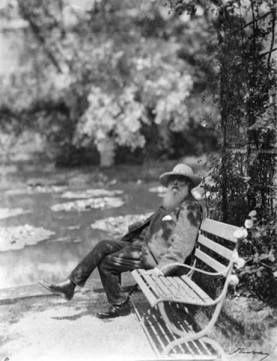
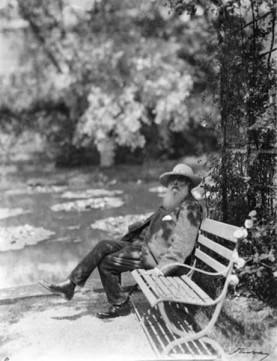
Claude Monet au soir de sa vie, à Giverny
le 12 juillet 1926.
Dans une lettre chaleureuse et pleine d’humour datée du 2 juillet 1926, Clemenceau écrivait à son ami pour confirmer sa venue ce jour-là :
« Mon cher ami, c’est décidé, le lundi 12 juillet à 10 heures du matin, je me présenterai chez vous avec une faim à tout dévorer, tandis que vous dégusterez votre soupe au lait, vous me verrez engouffrer tous les poissons de la Loire et le bétail de vos prairies… »

July 12, 1926: The pleasure of driving and silencing Clemenceau

The July sun is already baking the Parisian cobblestones, but the national highway unfolding before us promises the crisp air of Normandy. I floor the Delage’s throttle. The four-cylinder engine revs up in a metallic roar that, to my immense delight, finally drowns out the thunderous voice of my passenger.

To my right, bundled up in his overcoat despite the heat, sits the true « Tiger. » Georges Clemenceau. My former boss. The man whose orders dictated the rhythm of my days and nights for years. But today, on this road to Giverny, the roles are reversed. Behind this large wooden steering wheel, I am the sole master on board. What unspeakable pleasure it is to pilot this machine and escape, if only for a few hours, the uninterrupted stream of his directives! The rushing wind whips under the windshield, sweeping away the worries of the ministry and offering me a sense of absolute freedom.

The old man has to shout to make himself heard over the din of the engine and the whistling air. He fidgets, checking his pocket watch: he wants to be in Giverny at ten o’clock sharp. He bellows in my ear what he wrote to Monet ten days ago. He laughs in anticipation, a mischievous glint in his eye behind bushy eyebrows: while poor Monet is reduced to sipping his old man’s milk soup, he, Clemenceau, fully intends to arrive with « an appetite to devour everything » and wolf down all the fish of the Loire and the cattle of the Normandy pastures!

Driving our Torpedo at nearly 80 km/h along these dirt roads is an experience of such rawness that future generations, nestled in rolling lounges, will find it hard to imagine. Here, nothing is muffled, nothing is automated. It is a constant physical wrestle with the elements:

 The din and the wind: No side windows, no roof. We are suspended in the open air, our faces whipped by a continuous blast of wind that forces us to wear thick leather goggles to avoid being blinded.

 The ordeal of dust: The roads are unpaved. Every time I pass a cart or a truck, an immense curtain of white dust engulfs us. My long, ecru linen duster coat is already grey with soot. We breathe the road, we live it, we eat it.

 The gear-shifting gymnastics: Every deceleration is a challenge. Since the gearbox is unsynchronized, I must practice the delicate art of double-clutching. A press of the pedal to disengage, a tap of the throttle in neutral to match the gear speeds, a second press of the pedal to engage the gear… If I miss, the gears screech in a sinister metallic crunch that makes the old man beside me grit his teeth.

 The physical exertion: The steering is incredibly heavy. Without any power assistance, wrestling the Delage through the sharp bends past Vernon requires a true athlete’s grip. As for the braking, purely mechanical and cable-operated, it demands that I stomp on the pedal with all my weight, anticipating obstacles hundreds of meters in advance.

Despite the jolts from the leaf springs that threaten to break our backs at every pothole, the exhilaration is absolute. We roar through villages in a mechanical thunder, scattering chickens and turning the heads of peasants. In less than an hour, we will be at Monet’s. Until then, I savor every second of this tête-à-tête with speed, proud to pilot the Tiger toward his old friend, to the glorious rhythm of modernity.

Olivier le Tigre drives Georges Clemenceau to Giverny to see the painter Claude Monet. (Images de fiction)


Claude Monet in the twilight of his life, in Giverny on July 12, 1926.
In a warm and humorous letter dated July 2, 1926, Clemenceau wrote to his friend to confirm his visit that day:
« My dear friend, it is settled: on Monday, July 12 at 10 a.m., I shall arrive at your home with a ravenous appetite. While you savor your milk soup, you will see me devour all the fish of the Loire and the cattle from your pastures… »

July 11, 1926: The Fall of the Franc and Caressing Cats

Keep one’s cool. Consider that the events making the front-page headlines are nothing but froth, and focus only on the real waves—deeper, more powerful, yet less visible at the outset. Counter cries with calm, tumult with silence, and rational logic with herd behavior and raw emotion.

The franc crisis is dreadful—governments fall one after another, the pound sterling soars just like the public debt, and the mood in parliament is overheated—but there is no use in alarming the Head of State. We know that financiers, bankers, and other international investors are, above all, waiting for a strong signal showing that our country is once again led by a firm hand, one that will no longer let the currency and spending drift beyond what revenues allow.

That firm hand—only one remains: it belongs to Raymond Poincaré.

But if it appears too early, before all other hypotheses have been tried, it will lack sufficient strength. And so, we attempt to hand power to Herriot, Briand, or Caillaux.

The latter is even trying the old trick of the Roman emperor turned dictator, demanding « full powers. » This makes little sense in our parliamentary republic, but we must let him try, and then fail. « Froth, » I tell you.

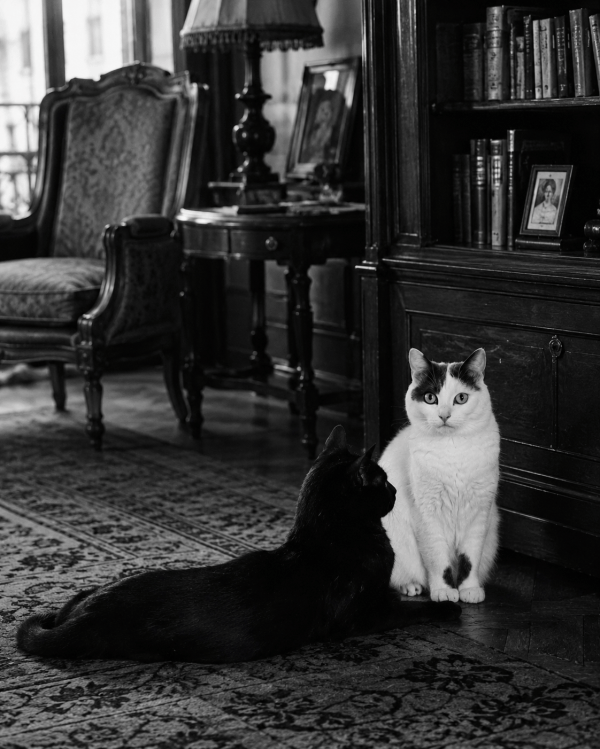
To maintain my own calm, to continue surrounding President Doumergue with sensible advice, I have a recipe, a remedy, a discreet trick: my two cats. Two females named Maïa and Luna. One entirely black, the other white with a few black patches, like a pattern from a Rorschach test. They adore being stroked; they purr with pleasure and do nothing all day but sleep, eat, and rub against members of the family and the housemaid.

Their purring soothes me, their tenderness disarms me, and they ward off negative thoughts through their sense of what truly matters. And indeed, in the end, is there anything more important than sleep, food, and the affection of loved ones? My kitties do not judge; they care nothing for titles or honors, and complex reasoning remains entirely beyond their reach. And yet, I assure you, they lack for nothing. A charming little belly, the swaying of which is clearly visible when they run toward their bowls, shows that the household feeds them well!

I would gladly offer cats to these wild parliamentarians, these feverish journalists, and these panicked bankers.

Until we bring out the big dog—our national Poincaré—the one who will know how to growl without ever needing to bite, and who will restore calm during this memorable summer of 1926.


Maïa and Luna, Olivier le Tigre’s two cats


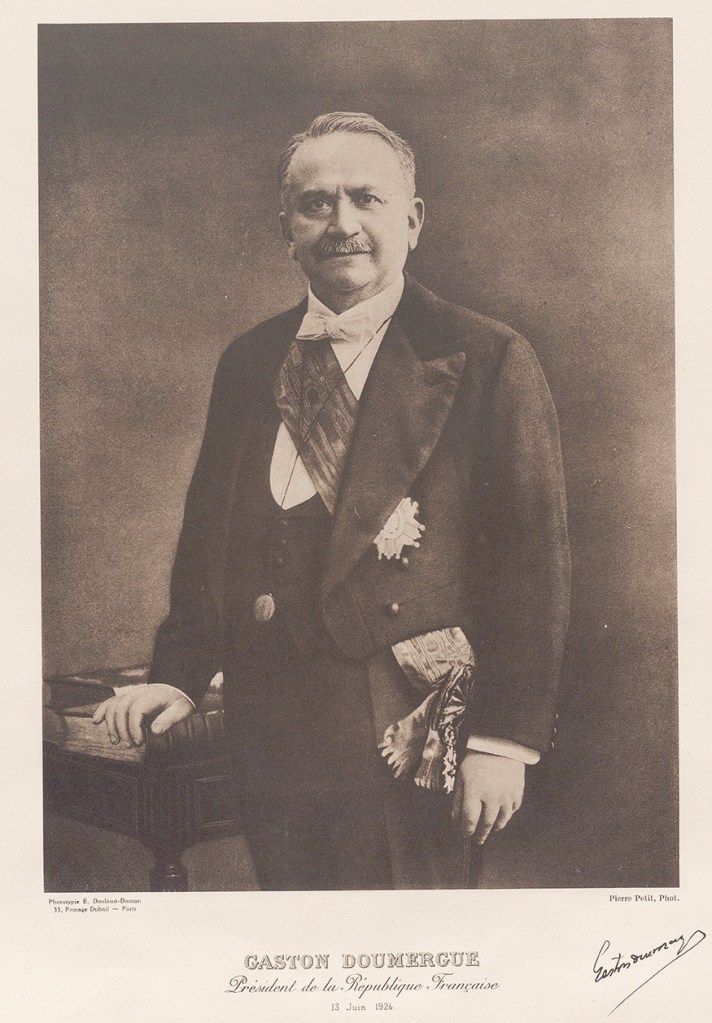
Gaston Doumergue, President of the French Republic
in 1926

Propulsé par WordPress.com.

Retour en haut ↑