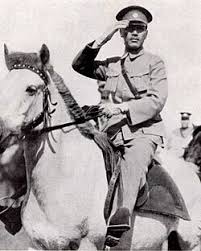
La Chambre a voté la confiance à Briand et Caillaux hier soir, mais l’atmosphère parisienne reste étouffante. Entre la chute du franc et les calomnies des journaux, j’étouffe sous les boiseries de l’Élysée. Pour échapper à la folie financière, j’ai donné rendez-vous à un type discret mais que j’aime bien : Alexis Leger. Le chef de cabinet de Briand m’attend au fond d’un bistrot désert, loin des députés braillards. Devant sa tasse, l’homme a l’élégance froide d’un marbre, mais ses yeux brûlent encore des lueurs de l’Orient où il a longtemps été en fonction.
Je m’assois en soupirant :
— Alexis, Gastounet s’inquiète. Nos comptoirs de Shanghaï et nos douanes en Indochine sont sur des braises. Expliquez-moi ce chaos chinois. Je ne vois qu’un nid de vipères où personne ne comprend rien.
Leger sourit, un sourire lointain, presque taoïste. Il sort un stylo et commence à dessiner des cercles sur la nappe en papier.
— Mon cher Olivier, me dit-il d’une voix feutrée, la Chine n’est pas un chaos. C’est un immense corps qui change de peau dans la violence. Pour comprendre ce qui s’y passe en ce moment précis de l’année 1926, oublions nos manuels de droit public. Il y a trois forces qui se disputent l’Empire du Milieu.
I. Les Seigneurs de la Guerre : Les maîtres du Nord
Leger pointe le haut de la nappe.
— Au Nord, à Pékin, le gouvernement officiel n’est qu’un fantôme. Le vrai pouvoir appartient aux seigneurs de la guerre. Des généraux en chef comme Wu Peifu ou Sun Chuanfang. Ils s’achètent des armées de mercenaires, pillent les provinces, lèvent des impôts trente ans à l’avance et pactisent avec les puissances occidentales pour protéger leurs trafics. C’est la Chine du passé, corrompue et féodale. Remarque : le Quai d’Orsay s’en accommodait très bien !
II. Le Kuomintang et Tchang Kaï-chek : La foudre du Sud
Son stylo descend brusquement vers le bas de la nappe, là où se trouve Canton.
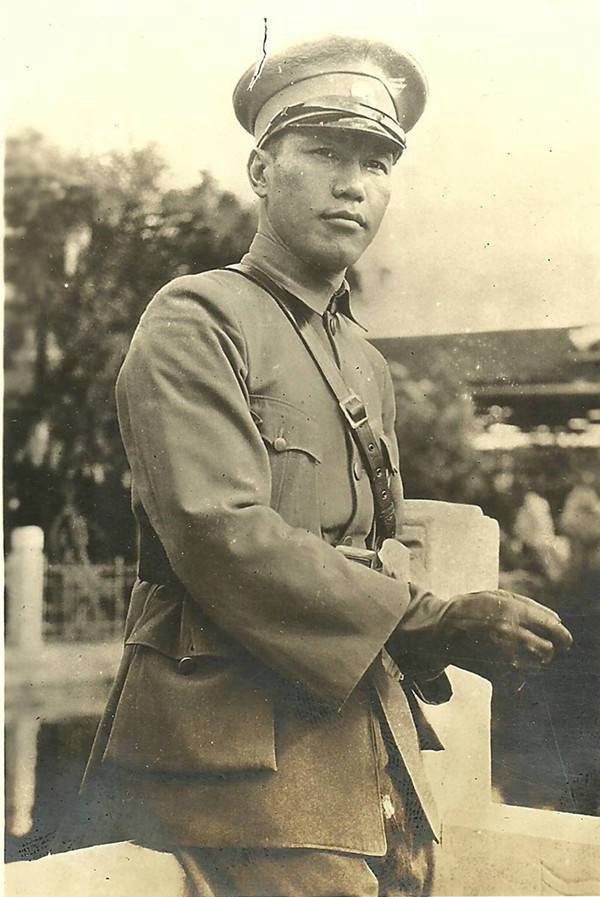
— Mais au Sud, une force nouvelle a surgi. Le Kuomintang, le parti nationaliste fondé par Sun Yat-sen. Et depuis sa mort, un homme a pris les rênes : le général Tchang Kaï-chek. C’est un fauve, Olivier. Un jeune militaire de trente-huit ans, sec, autoritaire, formé à la dure. Il a purgé ses rivaux à Canton en mars dernier et il s’est proclamé généralissime. Sa doctrine ? Unifier la Chine par les armes, chasser les seigneurs de la guerre et, à terme, nous jeter, nous les Blancs, à la mer.
Je l’interromps, intrigué :
— On dit à l’Élysée qu’il est soutenu par Moscou. C’est un bolchevique ?
Leger lâche un petit rire ironique en secouant la tête.
— C’est là que le drame devient fascinant. Tchang Kaï-chek n’a pas une once de marxisme en lui. C’est un nationaliste pur. Mais pour battre les généraux du Nord, il avait besoin d’armes et de discipline. L’URSS lui a fourni les deux : des instructeurs militaires russes et des millions de roubles. En échange, Tchang a accepté d’intégrer les communistes chinois au sein de son armée. C’est le Premier Front Uni. Une alliance contre nature entre la faucille et le sabre.
III. La mèche est allumée : L’Expédition du Nord
Leger trace une grande flèche droite qui remonte du sud vers le centre du pays, transperçant ses cercles.
« Les rapports secrets de nos consulats sont formels, Olivier. L’ordre de marche est signé. Dans quelques jours, en ce mois de juillet, Tchang Kaï-chek va lancer son armée de 100 000 hommes vers le Nord. C’est l’Expédition du Nord. »
Il se penche vers moi, le regard intense :
— Et cette armée avance avec deux moteurs. Les généraux de Tchang gagnent les batailles militaires, tandis que les militants communistes, infiltrés à l’arrière, soulèvent les ouvriers et les paysans. Ils déclenchent des grèves monstres, paralysent les usines des seigneurs de la guerre et ouvrent les portes des villes aux troupes nationalistes. C’est une vague de fond qui va balayer le centre de la Chine et arriver sous peu aux portes de Shanghaï.
Je termine mon café, le dos glacé malgré la chaleur de juin.
— Et l’alliance entre Tchang et les communistes tiendra jusqu’au bout ?
Alexis Leger range son stylo, remet son chapeau et me fixe avec ce détachement froid qui le caractérise :
— Jamais. Tchang Kaï-chek utilise les Rouges pour faire le sale boulot et soulever les masses. Mais les grands banquiers de Shanghaï et les triades locales lui offrent déjà des fortunes pour préserver l’ordre capitaliste. Dès que Tchang aura les clés de la ville, il écrasera les communistes comme des insectes. Ce ne sera pas une transition politique, Olivier. Ce sera un bain de sang. Et la France devra décider si elle protège ses coffres-forts ou ses grands principes. »
Il se lève, me salue d’un geste courtois et s’efface dans la lumière de la rue. Je reste seul devant la nappe en papier barbouillée de flèches. La Chine de 1926 est un volcan, et les projections de lave menacent d’atteindre nos colonies d’Asie bien plus vite que ne le croient les aveugles du Palais-Bourbon.
1926 : L’Année des Grandes Ruptures – Crises, Paix et Modernité
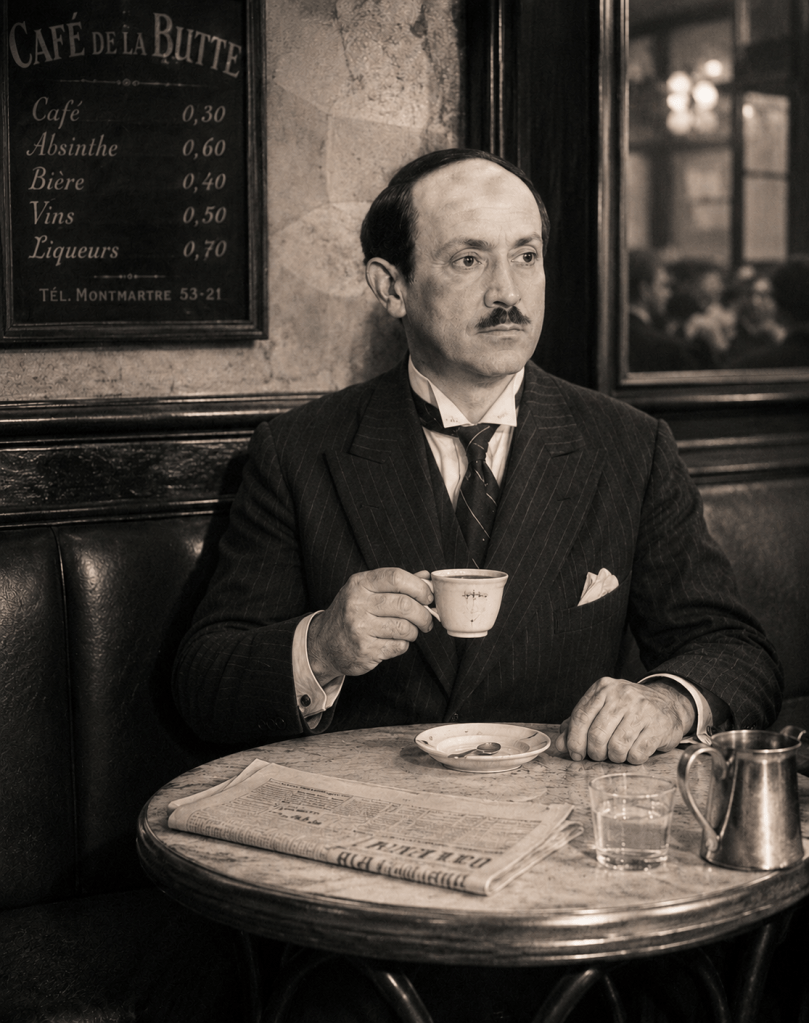
(c’est aussi – presque en secret – l’écrivain Saint-John Perse)
June 30, 1926: Seething China Finally Explained
Last night, the Chamber voted its confidence in Briand and Caillaux, yet the Parisian atmosphere remains suffocating. Between the collapse of the franc and the slander of the press, I feel stifled beneath the wood paneling of the Élysée. To escape this financial madness, I arranged a meeting with a discreet fellow whom I quite like: Alexis Leger. Briand’s chief of staff is waiting for me at the back of a deserted bistro, far from the brawling deputies. Seated before his cup, the man possesses the cold elegance of marble, though his eyes still burn with flashes of the Orient, where he served for many years. I sit down with a sigh: “Alexis, Gastounet is worried. Our trading posts in Shanghai and our customs offices in Indochina are sitting on live coals. Explain this Chinese chaos to me. All I see is a nest of vipers where nobody understands a thing.” Leger smiles—a distant, almost Taoist smile. He pulls out a pen and begins drawing circles on the paper tablecloth. “My dear Olivier,” he says in a hushed voice, “China is not in chaos. It is an immense body shedding its skin through violence. To understand what is happening at this precise moment in the year 1926, let us forget our textbooks on public law. There are three forces vying for the Middle Kingdom.”
I. The Warlords: The Masters of the North
Leger points to the top of the tablecloth.
“In the North, in Peking, the official government is nothing but a ghost. True power belongs to the warlords—commanders-in-chief like Wu Peifu or Sun Chuanfang. They buy up mercenary armies, plunder provinces, levy taxes thirty years in advance, and strike deals with Western powers to protect their illicit trades. This is the China of the past: corrupt and feudal. Mind you, the Quai d’Orsay accommodated it perfectly fine!”
II. The Kuomintang and Chiang Kai-shek: Lightning from the South
His pen abruptly drops toward the bottom of the tablecloth, right where Canton lies.
“But in the South, a new force has arisen: the Kuomintang, the nationalist party founded by Sun Yat-sen. And since his passing, one man has taken the reins: General Chiang Kai-shek. He is a predator, Olivier. A lean, authoritarian thirty-eight-year-old soldier, hardened by ruthless training. He purged his rivals in Canton last March and proclaimed himself Generalissimo. His doctrine? To unify China by force of arms, drive out the warlords, and ultimately drive us—the white men—into the sea.”
I interrupt him, intrigued:
“They say at the Élysée that he is backed by Moscow. Is he a Bolshevik?”
Leger lets out a brief, ironic chuckle, shaking his head.
“That is where the drama becomes truly fascinating. Chiang Kai-shek does not have an ounce of Marxism in him. He is a pure nationalist. But to defeat the Northern generals, he needed weapons and discipline. The USSR provided him with both: Russian military instructors and millions of rubles. In exchange, Chiang agreed to integrate the Chinese Communists into his army. This is the First United Front—an unnatural alliance between the sickle and the sword.”
III. The Fuse is Lit: The Northern Expedition
Leger draws a large, straight arrow pointing upward from the south toward the center of the country, cutting through his circles.
“The secret reports from our consulates are unequivocal, Olivier. The marching orders have been signed. In a few days, in this month of July, Chiang Kai-shek will launch his army of 100,000 men toward the North. This is the Northern Expedition.”
He leans toward me, his gaze intense:
“And this army advances with a twin engine. Chiang’s generals win the military battles, while Communist militants, infiltrated behind the lines, rouse the workers and peasants. They spark massive strikes, paralyze the warlords’ factories, and open city gates to the nationalist troops. It is a groundswell that will sweep through central China and arrive shortly at the gates of Shanghai.”
I finish my coffee, a chill running down my spine despite the June heat.
“And will the alliance between Chiang and the Communists hold until the very end?”
Alexis Leger pockets his pen, puts his hat back on, and fixes me with that cold detachment so characteristic of him:
“Never. Chiang Kai-shek is using the Reds to do the dirty work and stir up the masses. But the wealthy bankers of Shanghai and the local triads are already offering him fortunes to preserve the capitalist order. As soon as Chiang holds the keys to the city, he will crush the Communists like insects. It will not be a political transition, Olivier. It will be a bloodbath. And France will have to decide whether she protects her vaults or her grand principles.”
He stands up, greets me with a courteous gesture, and fades into the street light. I am left alone before the paper tablecloth scrawled with arrows. The China of 1926 is a volcano, and its lava flows threaten to reach our Asian colonies far quicker than the blind men of the Palais-Bourbon believe.


Laisser un commentaire