July 14, 1926: The Honor of Monuments, the Horror of Parents

Paris celebrates July 14th under a blazing sun. The brass bands relentlessly type out, like a staccato rhythm, unending military marches along the grand boulevards, and the crowd presses forward to watch the troops parade. Amidst this official joy, I cross paths with Henri Varin near the city hall of the 14th arrondissement. We sat on the benches of the Lycée Condorcet together. I became a high-ranking civil servant; he remained an artisan, an art bookbinder from the Rue de la Tombe-Issoire. His hair has turned white all at once. In his buttonhole, there is no tricolor ribbon, but rather the small blue metal insignia of the Union Nationale des Combattants.

He paused for a moment in front of the arrondissement’s war memorial, where the national holiday’s bouquets are already beginning to wither in the heat. Engraved upon the stone is the name of his only son: Jean Varin, 1916.

— “Olivier,” he said simply, shaking my hand. His palm was cold despite the heatwave.

— “Henri. Aren’t you following the parade?”

He detached his gaze from the gilded letters. A silence settled between us—one of those silences that weigh heavier than the brass of the distant band. One never knows what to say to fathers. The newspapers celebrate heroic widows, the State adopts the nation’s orphans, but for fathers, language lacks words. One is not a « widower » to one’s child.

— “It’s our only grave,” Henri murmured, gesturing toward the block of limestone. “You know we never found anything. Nothing at all. The Somme kept everything.”

I nodded. I knew the story. The story of three hundred and fifty thousand families left without a body, condemned to search for a familiar face within the administrative lists of the Information Bureau. To break the chill, I made the mistake—the terrible mistake of the living who mean well:

— “Nicolas came back last week from his base in Thionville to complete his reserve service. He… he is being promoted to captain next month. In civilian life, he works at Latécoère. He organizes the pilots’ schedules, aircraft maintenance, and handles training. Aviation, his passion, treats him well.”

The word floated between us, indecent. Aviation. That daredevil arm of the service from which my Nicolas emerged without a scratch, his skin tanned by the open air, his laughter intact. Henri’s son, however, was pulverized by a 150 mm shell in an anonymous mud hole.

Henri avoided my gaze. His eyes fixed on the ground. His lips thinned, but anger did not come; there was no room left for anger in him, only an immense weariness.

— “That’s good, Olivier. It’s a blessing. They must live, these young ones.”

We walked a few paces to escape the crowd. In front of the zinc counter of a noisy café, he stopped and drew from his inside pocket a folded sheet of blue paper, crumpled at the corners, which he handed to me without a word. I recognized the letterhead of the Ministry of Pensions.

— “They rejected the file again,” he said in a flat, expressionless voice.

I read the lines with my bureaucratic eye. The law of March 31, 1919, is merciless. To obtain the « ascendant’s pension, » Henri had to prove that he lacked the necessary resources to live. They inspected his leather stock, measured his savings. The State applied Article 205 of the Civil Code: the pension is not a recognition of shed blood; it is a vulgar maintenance obligation. Because Henri still earns enough not to starve, Jean’s sacrifice is worth zero to the tax authorities.

— “They are telling me to come back when I am sixty, or if I become disabled,” he added with a bitter smile. “To them, Jean wasn’t a soldier who died for his country; he was just a breadwinner who owed me his daily bread. If I had been destitute, I would have been entitled to their charity. But as it is…”

He took back the paper, folded it in four, and slipped it into his jacket, just beneath the UNC insignia.

— “Thank goodness for the comrades at the local branch,” he sighed. “Over there, at least, when we sit around the table, they don’t ask for our tax returns. We know what we gave.”

He declined my invitation to have a drink. He had to get home. I knew what awaited him in his apartment on the Rue de la Tombe-Issoire. His wife, his home transformed into a sanctuary. On the mantelpiece, the inner circle of mourning had closed: beneath a glass dome lay a pocket watch stopped by moisture, a metal identity tag pitted with rust that a survivor from his unit had brought back to them in 1917, and the final letter, dated September 12th, its ink fading a little more each day.

I watched him walk away just as the first firecrackers of July 14th exploded at the end of the street. My son Nicolas is alive. And today, amidst the flags, I am almost ashamed of my joy.


The war memorial with the name of Jean Varin, who fell in 1916. There are other Varins on this grim list, the name being a fairly common one.
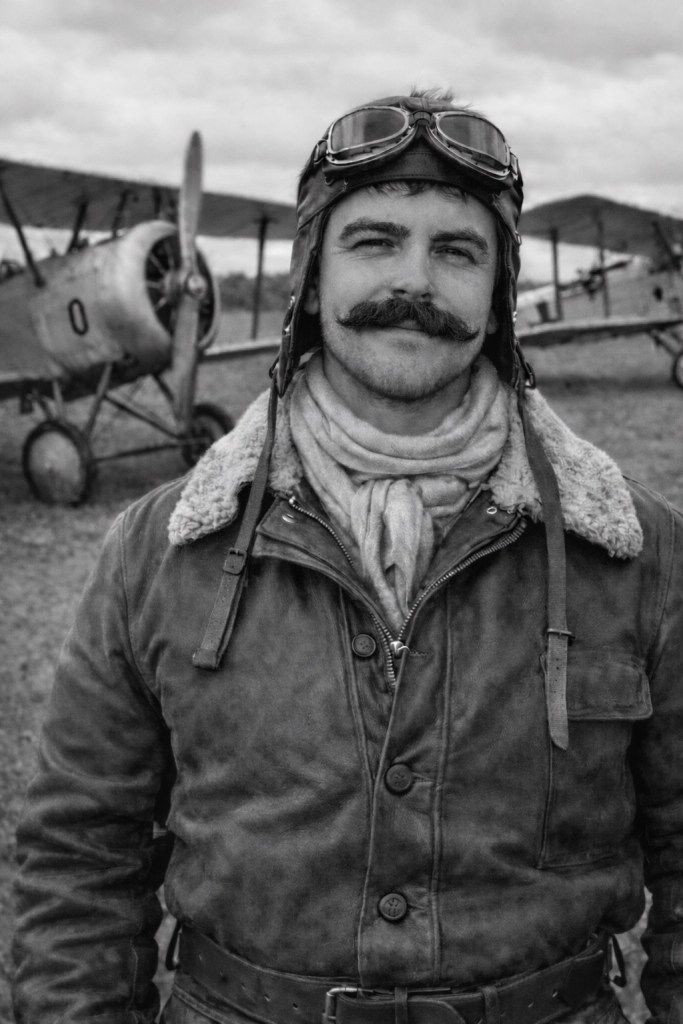

Nicolas, the son of Olivier « le Tigre, » has just been promoted to reserve captain in the Air Force.

Author’s Note on Narrative License

The character of Henri Varin, his trade as an art bookbinder, the exact details of his conversation with Olivier, and the precise location of their meeting in the 14th arrondissement of Paris are narrative constructs created for this blog post. However, they accurately embody the fully documented experiences of bereaved families of that era.

The Historian’s Corner

Grief Without Words or Status

In 1926 France, wartime mourning was a staggering, ubiquitous reality: the country wept for 1.4 million soldiers who fell at the front, and it is estimated that nearly two-thirds of the population belonged to a « circle of grief. » Yet, unlike war widows or orphans adopted under the legal status of Pupilles de la Nation (Wards of the Nation), the parents of killed soldiers possessed no specific symbolic or legal status of their own. This lack of lexical and official recognition deepened the psychological isolation of these ascendants stripped of their lineage, as detailed in the study by the Service historique de la Défense (Defense Historical Service) on the status of wartime mourning.

The Coldness of the « Ascendant’s Pension »

The administrative treatment of parents by the landmark law of March 31, 1919 (which founded the Military Disability and War Victims Pensions Code) illustrates a strictly material, rather than commemorative, logic. To obtain financial assistance, a father had to be at least 60 years old and a mother 55, while providing strict proof of insufficient resources.

Legally, this pension was modeled on the maintenance obligation defined by Article 205 of the French Civil Code: the State simply substituted itself for the deceased son to provide for the vital needs of destitute parents. Wealthy families or the working middle class were entirely excluded, turning their grief into a purely private matter without the slightest national compensation—an administrative severity recalled in the French Senate’s analyses on the right to reparation.

The Missing and the Cult of Relics

The situation of Henri’s son exemplifies the tragedy of the 350,000 French soldiers whose bodies were never recovered or identified, having been pulverized by artillery or buried deep in zones of intense combat. For these families, the absence of remains made traditional funeral rites impossible.

In response, relatives developed an intimate, sacred devotion to the small personal effects of the deceased, sent back by brothers-in-arms or recovered much later. This phenomenon of the « sanctification of relics » (identity tags, uniform fragments, notebooks) preserved under glass domes is analyzed in depth in the reference literature on commemoration and mourning practices in France.

The Home-as-Temple and Circles of Grief

The historian Stéphane Audoin-Rouzeau theorized these post-1918 family dynamics. Through private archives, he demonstrates how the loss of a son froze the domestic space, transforming some homes into true memorial temples where time stood still. Mourning was organized in concentric « circles » extending from the parents to networks of friends, maintaining a constant memorial pressure throughout the 1920s—a subject explored in his work presented by the journal L’Histoire.

War Memorials and the Associative Refuge

Enacted to regulate collective mourning, the law of October 25, 1919, required every municipality to honor the memory of its dead. In the absence of individual graves for nearly a quarter of the soldiers, local war memorials served as indispensable collective tombs for families, including during national holidays like Bastille Day, as explained by the Chemins de mémoire portal.

In the face of state shortcomings, major veterans’ organizations like the Union Nationale des Combattants (UNC) opened their local branches en masse to bereaved parents. As demonstrated by the historian Antoine Prost in his seminal works covered by Le Monde, these associations provided an essential space for sociability and civic recognition against the silence of institutions.

Additional Bibliography

 Audoin-Rouzeau, Stéphane, Cinq deuils de guerre (1914-1918) [Five War Mournings], Paris, Tallandier, 2001.

 Prost, Antoine, Les Anciens Combattants et la société française (1914-1939) [Veterans and French Society], Paris, Presses de la Fondation nationale des sciences politiques, 1977 (3 vols.).

 Winter, Jay, Sites of Memory, Sites of Mourning: The Great War in European Cultural History, Cambridge, Cambridge University Press, 1995.

The Weather on this Bastille Day

The month of July 1926 remains in meteorological annals as one of the hottest of the 20th century in France, marked by a historic heatwave that gripped the entire country, particularly between July 10th and 15th.

In Paris, on that specific day of July 14, 1926:

 The sky was perfectly clear.

 Suffocating temperatures choked the capital, soaring well past 35°C in the shade during the afternoon.

The heavy atmosphere, the swirling dust, and the withering flowers on the local war memorial described above are therefore not poetic license at all: Parisians truly celebrated this Bastille Day of 1926 by desperately seeking out shade and the cool relief of lemonades!

1926: The Year of Great Breakups— Crises, Peace, and Modernity

10 mai 1926 : « C’était mieux avant ! »

Dans les cafés, au travail, en discutant avec les voisins ou les commerçants sur le marché du dimanche : toujours cette même phrase qui m’agace, cette nostalgie d’un passé qui n’a souvent jamais existé : « C’était mieux avant ! »

À les entendre, « en 1900, Paris était plus sûr, on mangeait mieux, les jeunes respectaient les vieux, les ouvriers les patrons – et réciproquement – les fonctionnaires faisaient encore un travail consciencieux, notre armée était plus forte, les autres pays respectaient la France. »

Le désespoir de certains – entretenu par une certaine presse complaisante étalant à l’infini nos difficultés budgétaires, les divisions de la Chambre et la faiblesse du franc – apparaît comme infini.

1900, une belle époque ? C’est à mourir de rire.

Et les voyous – appelés Apaches – qui nous obligeaient à sortir discrètement armés d’un petit revolver dans la poche de notre pardessus ? Et les ministères qui tombaient les uns à la suite des autres ? Et l’Allemagne qui ne cessait de nous menacer et de nous mépriser depuis 1871, après avoir pris notre Alsace et notre Lorraine ? Et notre médecine balbutiante qui paniquait les femmes devant accoucher ? Et nos épouses priées de rester chez elles ou alors de peupler les usines comme les bureaux pour des salaires de misère ? Et les charges sans pitié de régiments de dragons, aux ordres du gouvernement, sur les travailleurs révoltés par leurs conditions de travail indignes ?

Ah, elle était magnifique, cette belle époque !

J’ai eu trois discussions la semaine dernière qui sont venues alimenter ma réflexion sur le sujet. J’ai longuement échangé avec Clemenceau, Poincaré… et ma femme.

Le résultat des courses se révèle sans appel. Clemenceau et ma femme, pas pour les mêmes raisons, partagent mon opinion, sur le regard critique qu’il convient de porter sur les années d’avant Grande Guerre. Clemenceau garde un souvenir déplorable de la querelle des inventaires, de l’affaire Dreyfus ou des grands mouvements sociaux de 1907. Et mon épouse considère que les années 1900 étaient plus le prolongement d’un XIXe siècle encore arriéré qu’un début de XXème siècle dominé par une science et des machines le plus souvent libératrices.

Poincaré, sans surprise, essaie au contraire de capitaliser sur les peurs : « Je ne reviendrai au pouvoir qu’avec la trouille et la frousse dans le ventre de chaque parlementaire et de tous les scribouillards des journaux financiers ! » « Quand le franc sera au plus bas, que personne ne voudra voter un budget, il faudra bien la poigne d’un homme d’expérience, qui sait « appeler un chat un chat » et tailler sans état d’âme dans les dépenses d’une Administration coûteuse et pas assez efficace. Et la France retrouvera sa grandeur, comme autrefois. »

Je lui ai glissé : « Vous savez pourquoi c’était mieux avant ? »

Devant son air interrogateur, j’ai complété avec un petit sourire : « C’est parce qu’on avait vingt ans ! »

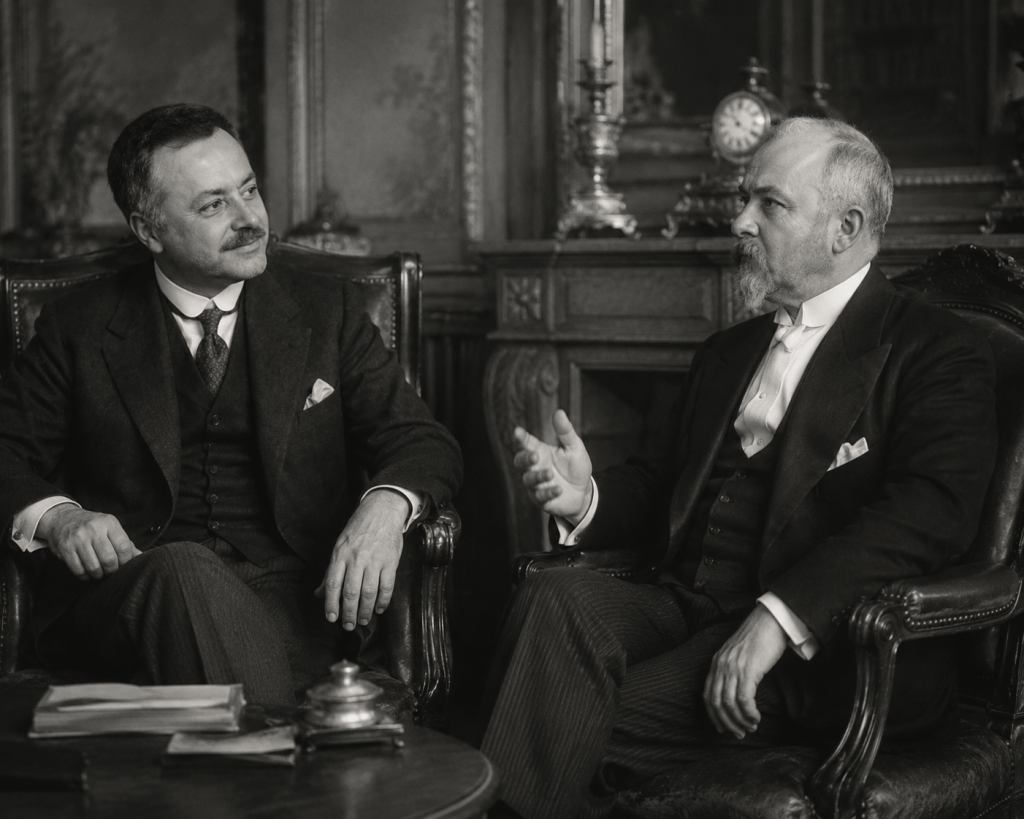
Raymond Poincaré explique sa stratégie à Olivier le Tigre : « Je ne reviendrai au pouvoir qu’avec la trouille et la frousse dans le ventre de chaque parlementaire ! » Image de fiction

May 10, 1926: “Things Were Better Back Then!”

In the cafés, at work, in conversation with neighbors or the merchants at the Sunday market: always that same phrase that irks me, that nostalgia for a past that often never existed: “Things were better back then!”

To hear them tell it, “In 1900, Paris was safer, the food was better, the young respected the old, workers respected bosses—and vice versa—civil servants still did conscientious work, our army was stronger, and other countries respected France.”

The despair of some—stoked by a compliant press endlessly parading our budgetary struggles, the divisions of the Chamber, and the weakness of the franc—seems infinite.

1900, a “Belle Époque”? It is enough to make one die laughing.

And what of the thugs—the so-called Apaches—who forced us to go out discreetly armed with a small revolver in our overcoat pocket? And the ministries that collapsed one after another? And Germany, which never ceased to threaten and despise us since 1871, after seizing our Alsace and Lorraine? And our fledgling medicine that sent women into a panic before childbirth? And our wives, expected to stay at home or else fill the factories and offices for pittance wages? And the merciless charges of dragoon regiments, acting on government orders, against workers revolted by their undignified working conditions?

Ah, it was magnificent, that Belle Époque!

I had three discussions last week that fed my reflections on the subject. I spoke at length with Clemenceau, Poincaré… and my wife.

The verdict is final. Clemenceau and my wife, though for different reasons, share my critical view of the years preceding the Great War. Clemenceau retains a wretched memory of the « Inventory Crisis, » the Dreyfus Affair, or the great social unrest of 1907. As for my wife, she considers the 1900s to be more of a lingering shadow of a backward 19th century than the dawn of a 20th century dominated by science and machines that are, more often than not, liberating.

Poincaré, unsurprisingly, tries instead to capitalize on fear: “I shall only return to power when there is fear and trembling in the gut of every parliamentarian and every hack writer of the financial rags!” “When the franc is at its lowest, when no one will vote for a budget, it will take the steady hand of a man of experience, one who knows how to ‘call a spade a spade’ and cut without remorse into the spending of a costly and inefficient administration. And France will find her greatness again, just as before.”

I whispered to him: “Do you know why things were better back then?”

Faced with his questioning look, I added with a slight smile: “It’s because we were twenty years old!”

19 avril 1926 : Le Paris-Versailles, 30 minutes de secrets et de songes

Tous les jours, je prends le train pour Paris. Après un court trajet à vélo depuis notre nouvelle demeure du Plateau Saint-Antoine jusqu’à la gare Rive Droite de Versailles, je me cale pour plus d’une demi-heure sur les sièges bien rembourrés,en velours rouge, dans un compartiment de première classe de la ligne Versailles-Paris Saint-Lazare.

Je côtoie, sans trop de déplaisir, un peu toujours les mêmes têtes, aux tempes grisonnantes : magistrats parisiens, hauts gradés d’état-major, députés et sénateurs, directeurs dans les ministères, dans les compagnies d’assurance de la rue de Londres ou les banques du boulevard Haussmann ou de la rue Chauchat. Nous lisons tous Le Temps. Discrètement, certains s’adonnent aux Mots Encroisés ou lisent des feuilletons du Journal. Il est d’usage de parler à voix basse, sans déranger les voisins et surtout sans (trop) dévoiler des informations confidentielles de nos maisons respectives.

Lors du voyage retour, le soir, il arrive qu’en cas de crise diplomatique ou ministérielle, le chef d’une des gares du trajet, accompagné d’un gendarme discipliné et respectueux, monte dans le train, me rejoigne tout essoufflé (j’ai presque toujours la même place) et m’indique qu’une voiture avec chauffeur m’attend pour me reconduire à l’Élysée. Je sais alors qu’une longue soirée voire une nuit de labeur m’attend auprès du chef de l’Etat.

La plupart du temps, c’est heureusement plus calme. Ayant l’une des deux places donnant sur la fenêtre, c’est à moi de bien penser à tout fermer quand nous approchons des tunnels pour éviter d’être envahis par les fumées de la locomotive.

Vers le milieu du parcours, je pose souvent mes dossiers à annoter ou mon journal et me laisse aller à la rêverie. Le train reste un moment de rencontre avec soi-même. Je me dis par exemple que je suis moins triste qu’il y a quelques mois par rapport au décès de ma mère fin 1924 ou je pense à mes proches dans leurs moments heureux (mes deux enfants les plus âgés ont fait des jolies rencontres) ou moins plaisants (les soucis personnels de collègues qui me sont chers).

Quand il est là, le préfet de la Seine-et-Oise, Adrien Bonnefoy-Sibour, adore se placer à mes côtés et me raconter ses rencontres avec le ministre de l’Intérieur ou des détails de sa vie de patron de la préfecture de Versailles, en espérant que je lui glisse, en retour, quelques éclairages sur la vie de l’Élysée. Nous agissons en fait tous les deux de la même façon : donner l’impression de confier un secret – alors qu’il est déjà largement éventé – en échange d’une information, elle, réellement confidentielle. À ce petit jeu, avec mon expérience, je bats le préfet toujours un peu trop bavard… mais il se révèle plutôt sympathique.

Lorsque je descends le soir à Versailles-Rive Droite, l’air est plus vif, chargé de l’odeur de l’immense parc du Château. Je récupère ma bicyclette à la consigne. La montée vers le Plateau Saint-Antoine est rude après une journée de conciliabules, mais elle est salutaire. À chaque coup de pédale dans l’obscurité des avenues désertes, je laisse derrière moi les intrigues de palais et les bruits de couloirs.

Arrivé devant les grilles de notre maison, je marque un temps d’arrêt. Le silence de Versailles en 1926 est absolu, seulement troublé par le frisson des feuilles. Ma mère n’est plus là pour m’attendre avec son regard inquiet, mais la lumière qui filtre à travers les persiennes m’indique que la vie continue, vibrante et douce. Je range mon vélo, je lisse mon manteau, et je franchis le seuil.

Ce soir, le « Tigre » de l’Élysée a fini sa journée. Place à l’homme de Saint-Antoine.

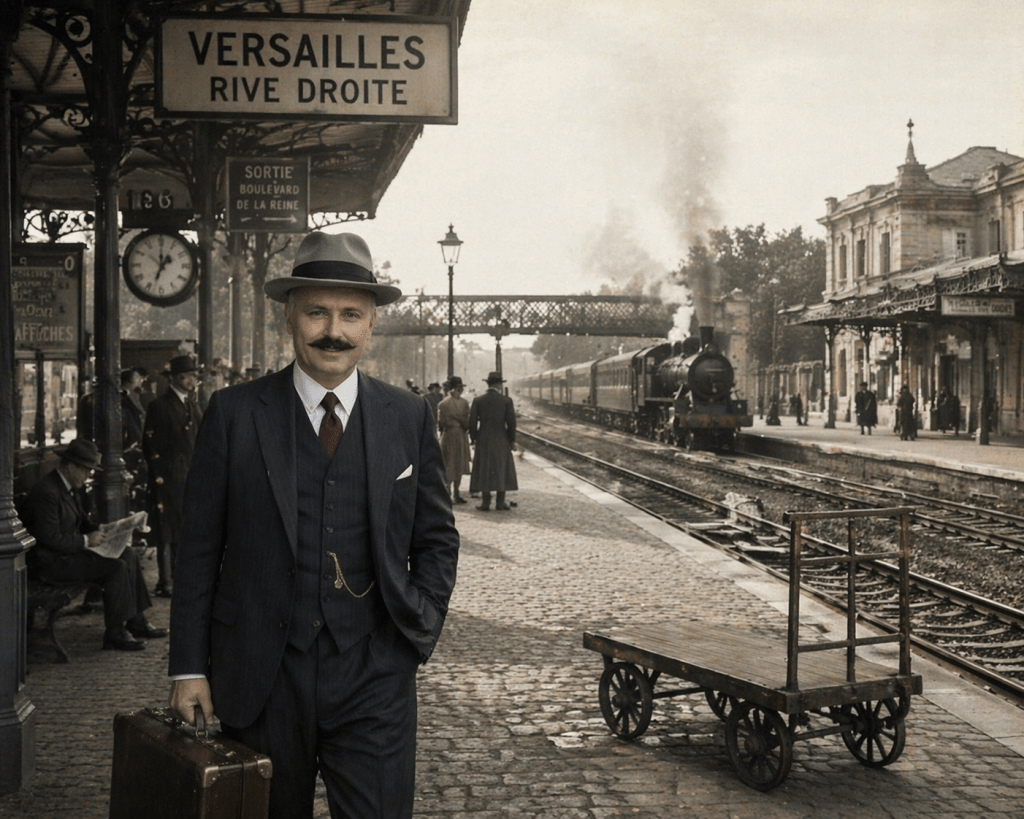
Olivier le Tigre à Versailles Rive Droite

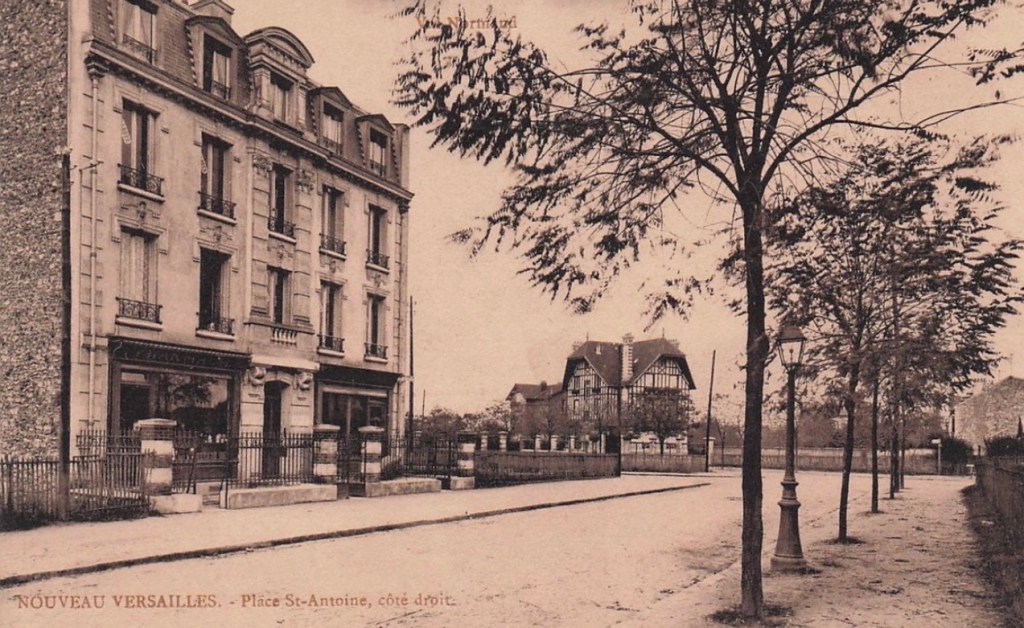
Le Plateau Saint-Antoine, en bordure de Versailles et de la petite ville du Chesnay

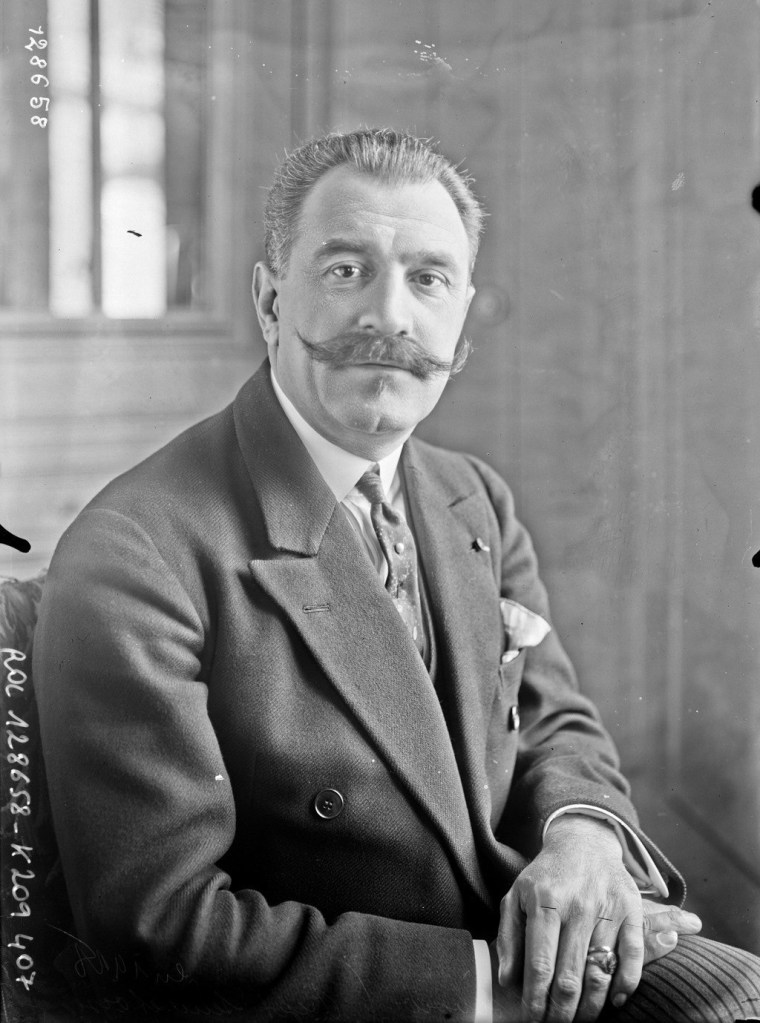
Adrien Bonnefoy-Sibour, préfet de la Seine-et-Oise dont le chef lieu est Versailles

Le podcast de l’historien : décryptons ensemble l’article d’aujourd’hui 🧐


April 19, 1926: The Paris–Versailles Line, Thirty Minutes of Secrets and Reverie

Each day, I take the train into Paris. After a short bicycle ride from our new home on the Plateau Saint-Antoine to Versailles–Rive Droite station, I settle in for the half-hour journey on the well-upholstered red velvet seats of a first-class compartment on the Versailles–Paris Saint-Lazare line.


I find myself, not without a certain ease, among more or less the same greying faces: Parisian magistrates, senior staff officers, deputies and senators, directors from ministries, insurance companies on the Rue de Londres, or banks along Boulevard Haussmann and Rue Chauchat. We all read Le Temps. Discreetly, some occupy themselves with crosswords or follow the serialized stories in Le Journal. It is customary to speak in low voices, so as not to disturb one’s neighbours and, above all, to avoid revealing too much about the confidential affairs of our respective institutions.


On the return journey in the evening, it sometimes happens—when a diplomatic or ministerial crisis arises—that the chief of one of the stations along the line, accompanied by a punctual and respectful gendarme, boards the train. Slightly out of breath, he makes his way to me (I almost always occupy the same seat) and informs me that a car with driver is waiting to take me back to the Élysée. I know then that a long evening, perhaps even a night of work, awaits me at the side of the Head of State.
Most of the time, fortunately, things are calmer. Sitting by the window, it falls to me to remember to close everything as we approach the tunnels, to keep out the locomotive smoke.
Around the midpoint of the journey, I often set aside my papers or my newspaper and let my thoughts wander. The train remains a rare moment of encounter with oneself. I sometimes reflect that I am less saddened than I was a few months ago by my mother’s passing in late 1924. Or I think of those close to me, in their happier moments—my two eldest children have met promising people—or in more difficult ones—the personal troubles of colleagues dear to me.


When he is there, the Prefect of Seine-et-Oise, Adrien Bonnefoy-Sibour, delights in sitting beside me and recounting his meetings with the Minister of the Interior, or the details of his life at the head of the Versailles prefecture, hoping in return that I might offer a glimpse into life at the Élysée. In truth, we both play the same game: giving the impression of confiding a secret—already widely known—in exchange for something genuinely confidential. At this game, with experience on my side, I generally have the advantage over the somewhat too talkative prefect… though he is, in truth, rather likeable.


When I step off the train in the evening at Versailles–Rive Droite, the air is sharper, carrying the scent of the vast park of the Château. I retrieve my bicycle from the stand. The climb up to the Plateau Saint-Antoine is demanding after a day of behind-the-scenes discussions, yet it is a welcome exertion. With each turn of the pedals through the darkness of the deserted avenues, I leave behind the intrigues of the palace and the murmurs of its corridors.
Arriving at the gates of our house, I pause for a moment. The silence of Versailles in 1926 is complete, broken only by the faint rustle of leaves. My mother is no longer there to await me with her anxious gaze, yet the light filtering through the shutters tells me that life goes on—gentle, and full of quiet vitality. I put away my bicycle, smooth my coat, and step inside.
Tonight, the “Tiger” of the Élysée has finished his day. Now the man of Saint-Antoine takes his place.

Propulsé par WordPress.com.

Retour en haut ↑